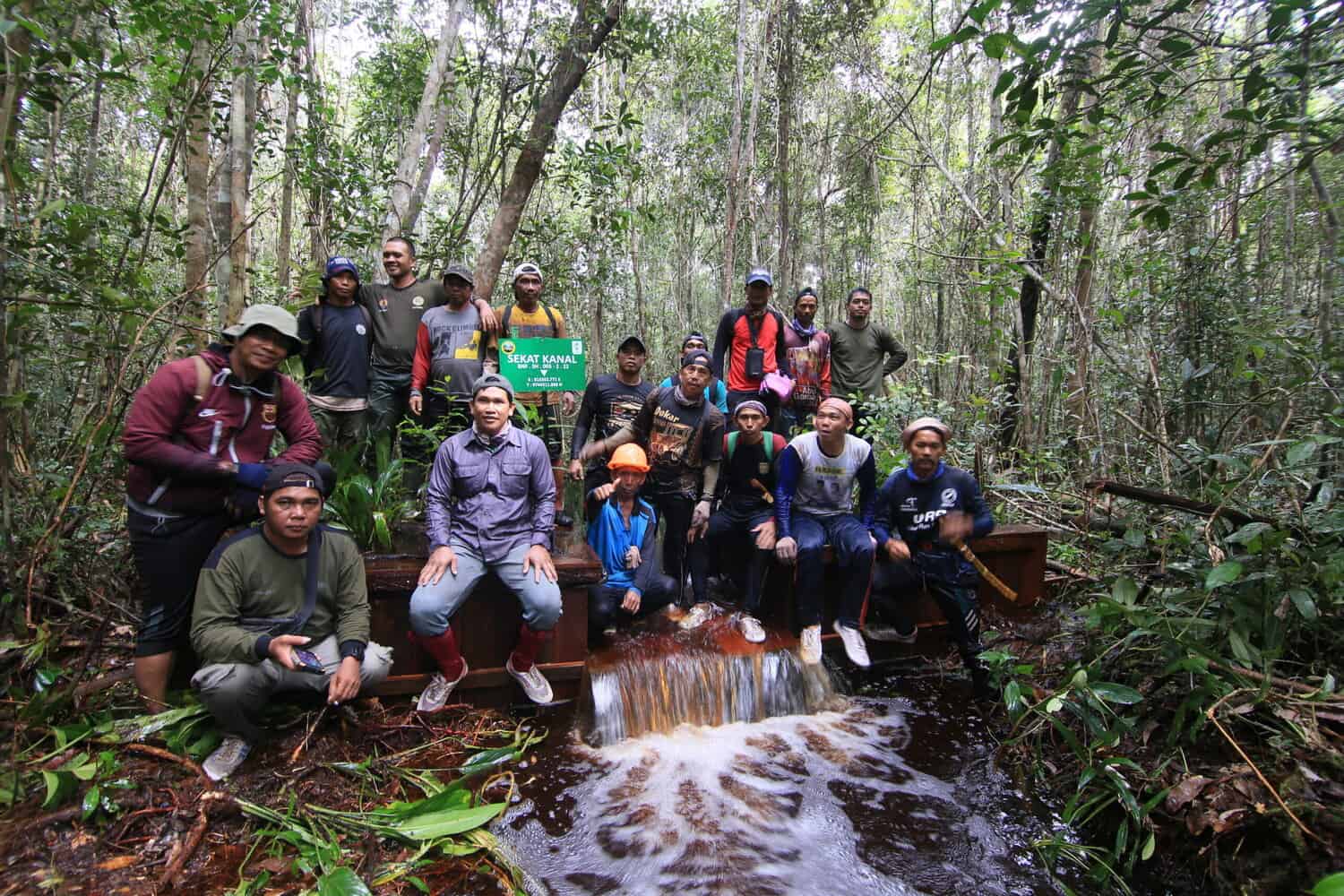
Borneo Nature Foundation (BNF) representatives attend National Red List Workshop for Indonesian gibbon species.
From 31 March to 3 April 2026, more than 55 people gathered in Bogor, Indonesia, to share data, knowledge and conservation plans for Indonesia’s gibbon species.
Key acronyms:
- IUCN – International Union for the Conservation of Nature
- SSC – Species Survival Commission
- IdSSG – Indonesia Species Specialist Group
- SSA – Section on Small Apes
Opening remarks were made by Professor Mirza Kusrini of the IUCN SSC Indonesia Species Specialist Group (IdSSG), followed by an introduction to the species assessment process by our Scientific Director and Chair of the IUCN Section on Small Apes, Dr Susan Cheyne. The session led by Dr Cheyne included training on the sRedList modelling platform, a tool developed to support assessors in calculating and informing key Red List assessment parameters.
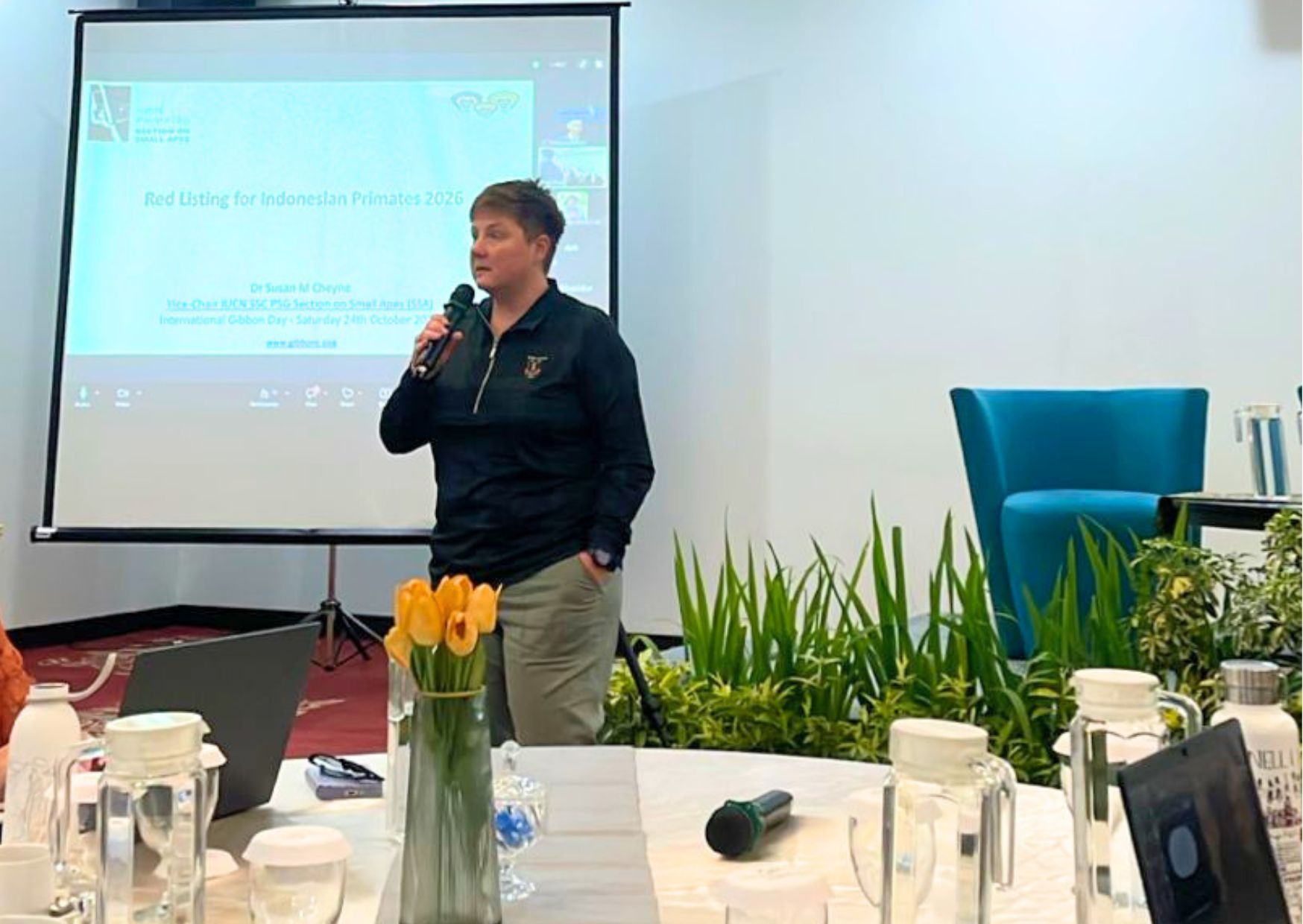
Knowledge and data sharing was a major component of the four-day workshop, with NGOs (including BNF), universities, government bodies, and companies set to contribute data to create the most accurate National Red List Assessments for Indonesian gibbons to-date. This data was compiled on all nine gibbon species to generate new distribution maps, containing more information than had ever been combined previously.
Indonesian gibbon species:
Bold = Endemic species, found only in Indonesia
* = Species we work with
- *Bornean white-bearded gibbon (Hylobates albibarbis) – Kalimantan, Indonesian Borneo
- *Müller’s gibbon (Hylobates muelleri) – Kalimantan, Indonesian Borneo
- Kloss’s gibbon (Hylobates klossii) – Mentawi Islands, Indonesia
- Javan gibbon (Hylobates moloch) – Java, Indonesia
- Agile gibbon (Hylobates agilis) – Sumatra, Indonesia; Peninsular Malaysia; Southern Thailand
- White-handed gibbon (Hylobates lar) – Sumatra, Indonesia; Laos; Peninsular Malaysia; Myanmar; Thailand
- Abbott’s grey gibbon (Hylobates abbotti) – Sarawak, Malaysian Borneo; Kalimantan, Indonesian Borneo
- Northern grey gibbon (Hylobates funereus) – Kalimantan, Indonesian Borneo; Sabah and Sarawak, Malaysian Borneo; Brunei
- Siamang (Symphalangus syndactylus) – Sumatra, Indonesia; Peninsular Malaysia
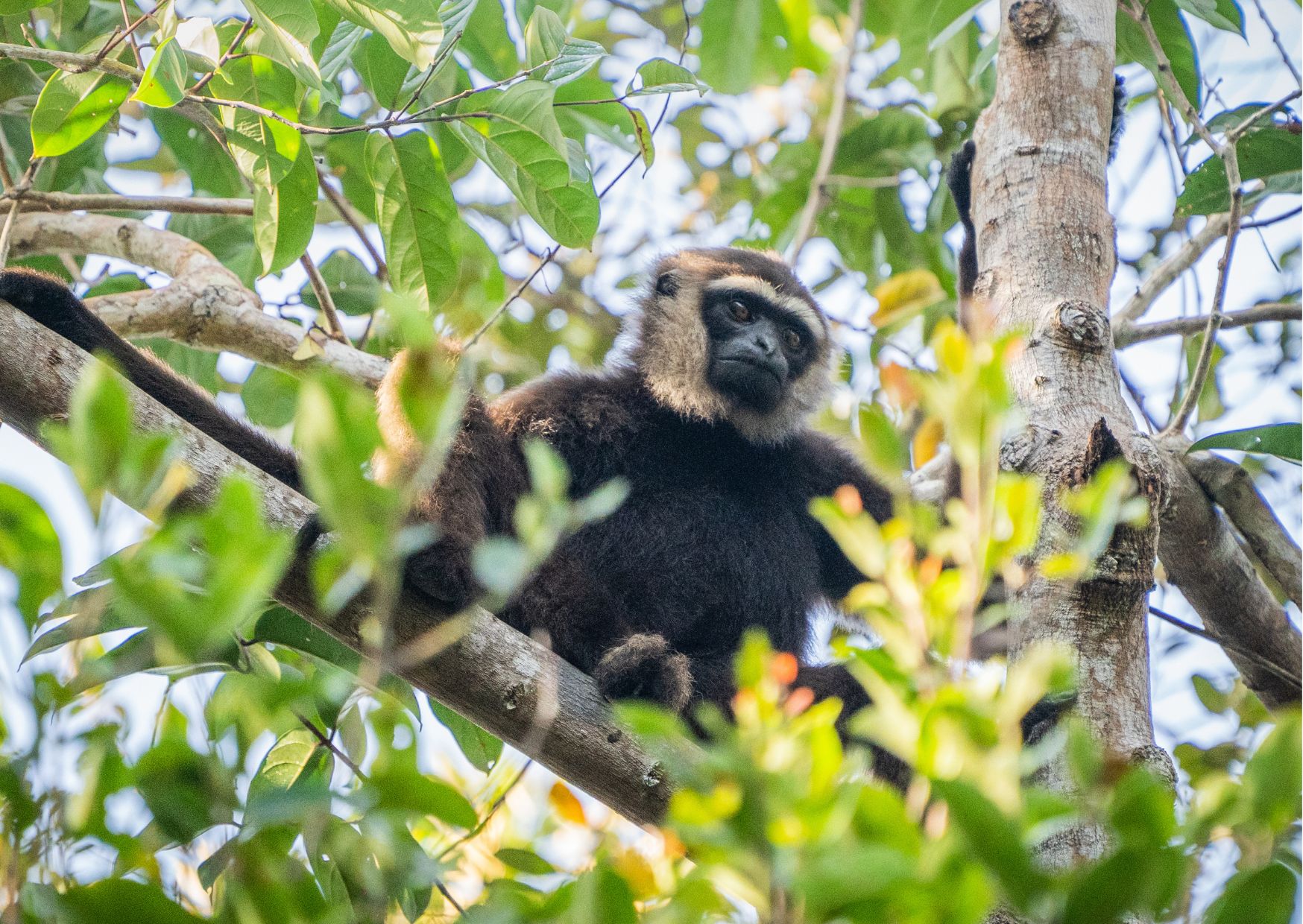
Together, our ambitious plans are to have the National Red List assessments completed by December 2026, and to update existing IUCN Red List assessments for the four Indonesian endemic species by November 2026. We will then work with partners in Malaysia and Thailand to update the other five species, which are also found outside Indonesia.
At Borneo Nature Foundation, we work with two of the four species that occur only in Indonesia: the Bornean white-bearded gibbon (Hylobates albibarbis) and the Bornean gray gibbon (Hylobates muelleri). With over 20 years of gibbon research, we have some of the most comprehensive, long-term data on these species’ distribution and density to contribute to the upcoming Red List assessments. During the recent workshop, Dr Susan Cheyne and Risfatul Ulya, BNF Primate Scientist, were instrumental in sharing their knowledge and experience.
The workshop also included discussions of threats to Indonesia’s gibbons, including the increase in online sales of gibbons as pets (keeping any gibbon as a pet is illegal). Another key topic was how we can work together for effective conservation across multiple regions within Indonesia (Java, Kalimantan and Sumatra), Indonesia as a whole, and, for the five species also found outside of Indonesia, other gibbon range countries.
But assessing the levels of threat is only the first step! Using this information, we will build on the 2024-2034 Indonesian Gibbon Roadmap to create a clear National Action Plan, leveraging conservation actions for the nation’s amazing singing, swinging small apes. This will be facilitated by IdSSG and the new gibbon conservation forum, Jejek Owa.
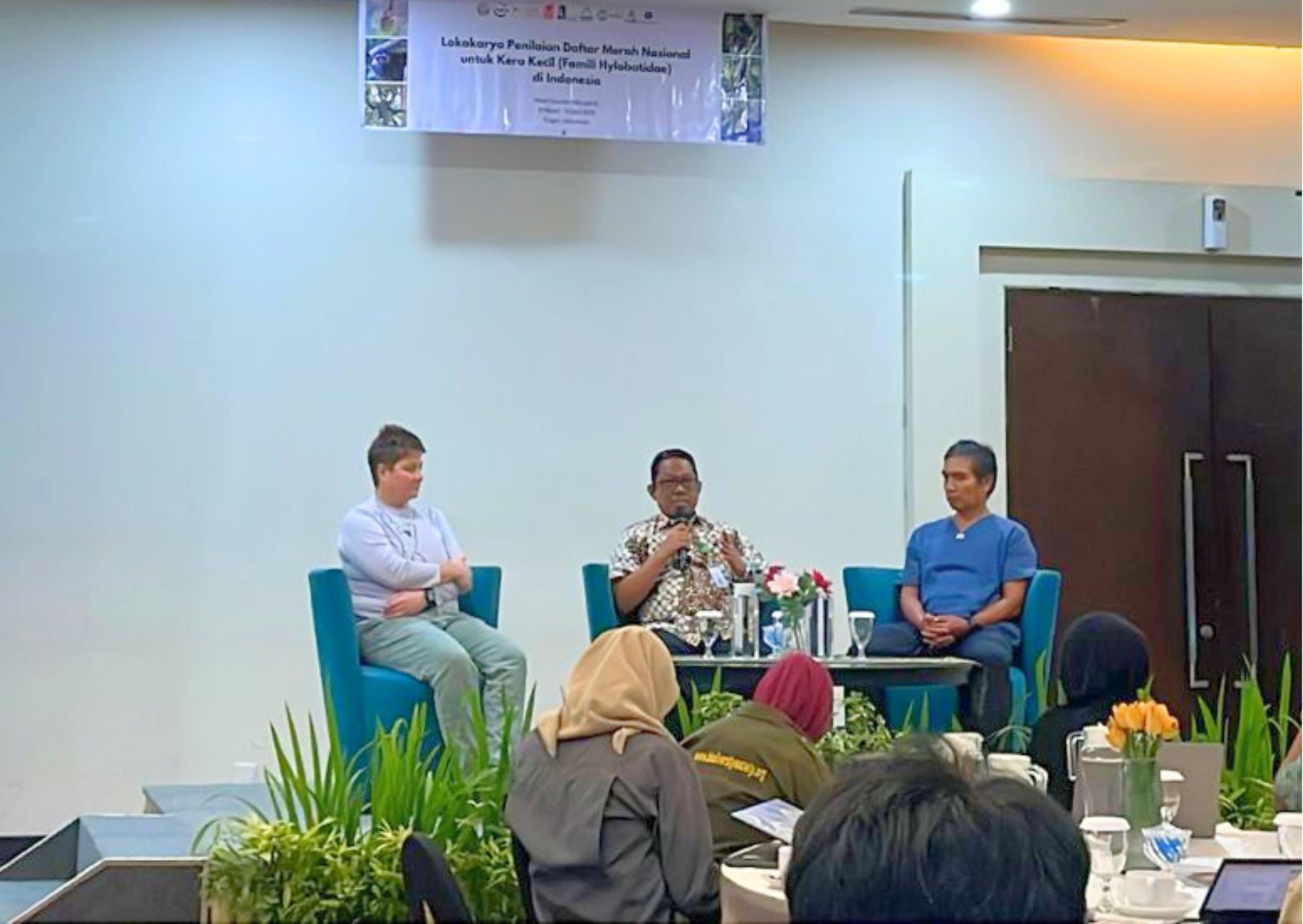
Closing remarks were made by Dr Sunarto (IdSSG), Dr Susan Cheyne, and Director of Species and Genetic Conservation at the Ministry of Forestry, Dr Ahmad Munawir, who each offered their advice and wholehearted support to the gathered experts.
Watch this space for more gibbon conservation updates!