

What comes to mind when you hear the phrase “tree planting”?
For many, it conjures images of PR-style photoshoots: perfectly coiffed volunteers smiling for the camera, shovels in hand, their brows conspicuously unbroken by sweat.
What we do in Borneo isn’t that kind of tree planting.
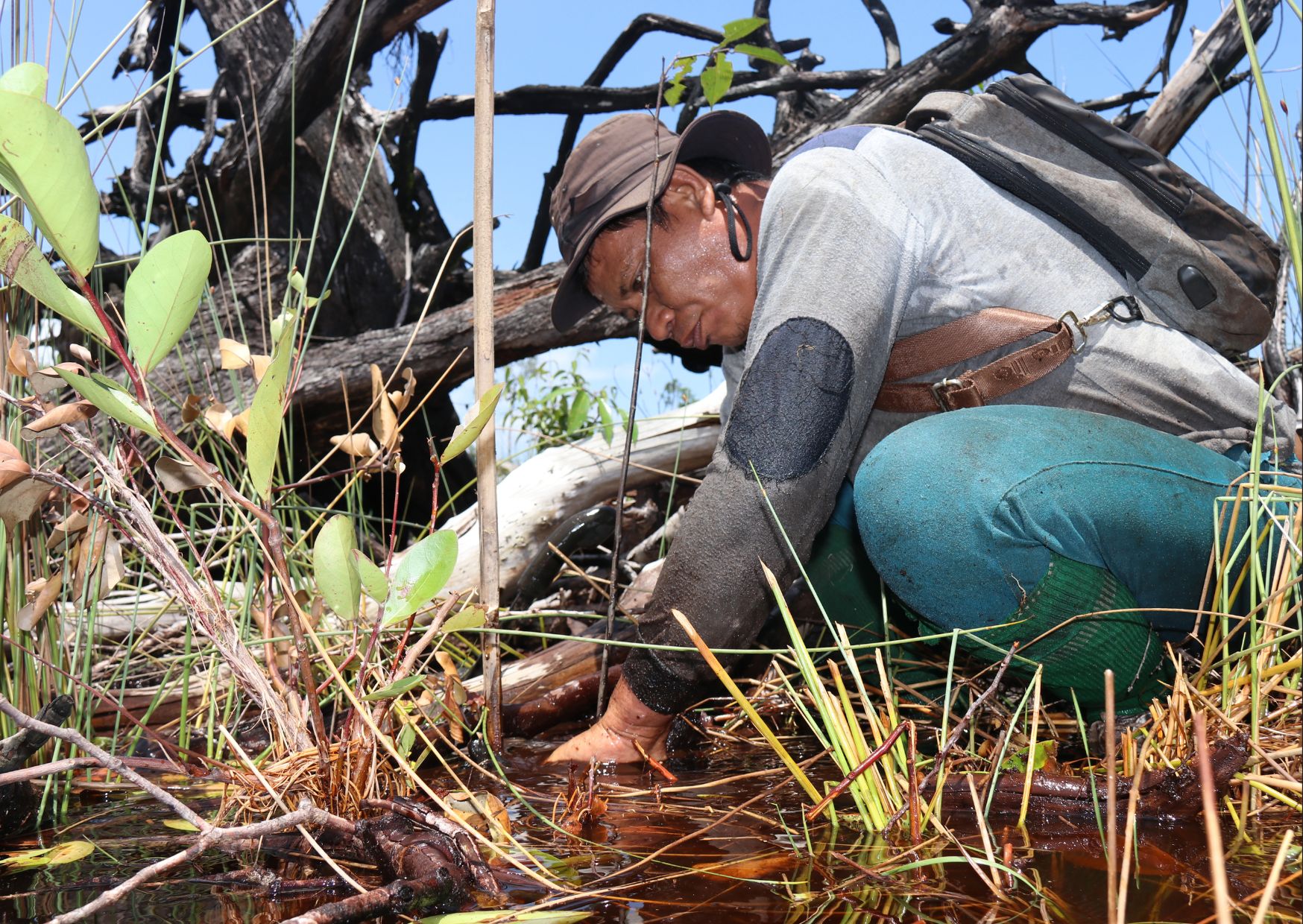
We plant trees to restore burned and degraded areas of rainforest in Borneo. While our projects span a range of habitat types, much of our planting takes place in the tropical peat swamp forest of Sebangau National Park.
Peat swamp forests are among the toughest environments imaginable — for both people and plants. The peat soil is highly acidic and, in its natural state, remains waterlogged year-round. Navigating this landscape is physically demanding, and establishing young trees here requires careful planning, persistence, and no small amount of grit.
Recently, our reforestation teams took on their toughest challenge yet: transporting 130,000 young trees from community-managed seedling nurseries to a new planting site more than 100 kilometres away, deep within the peat swamp rainforest of Sebangau National Park. Talk about exTREEme!
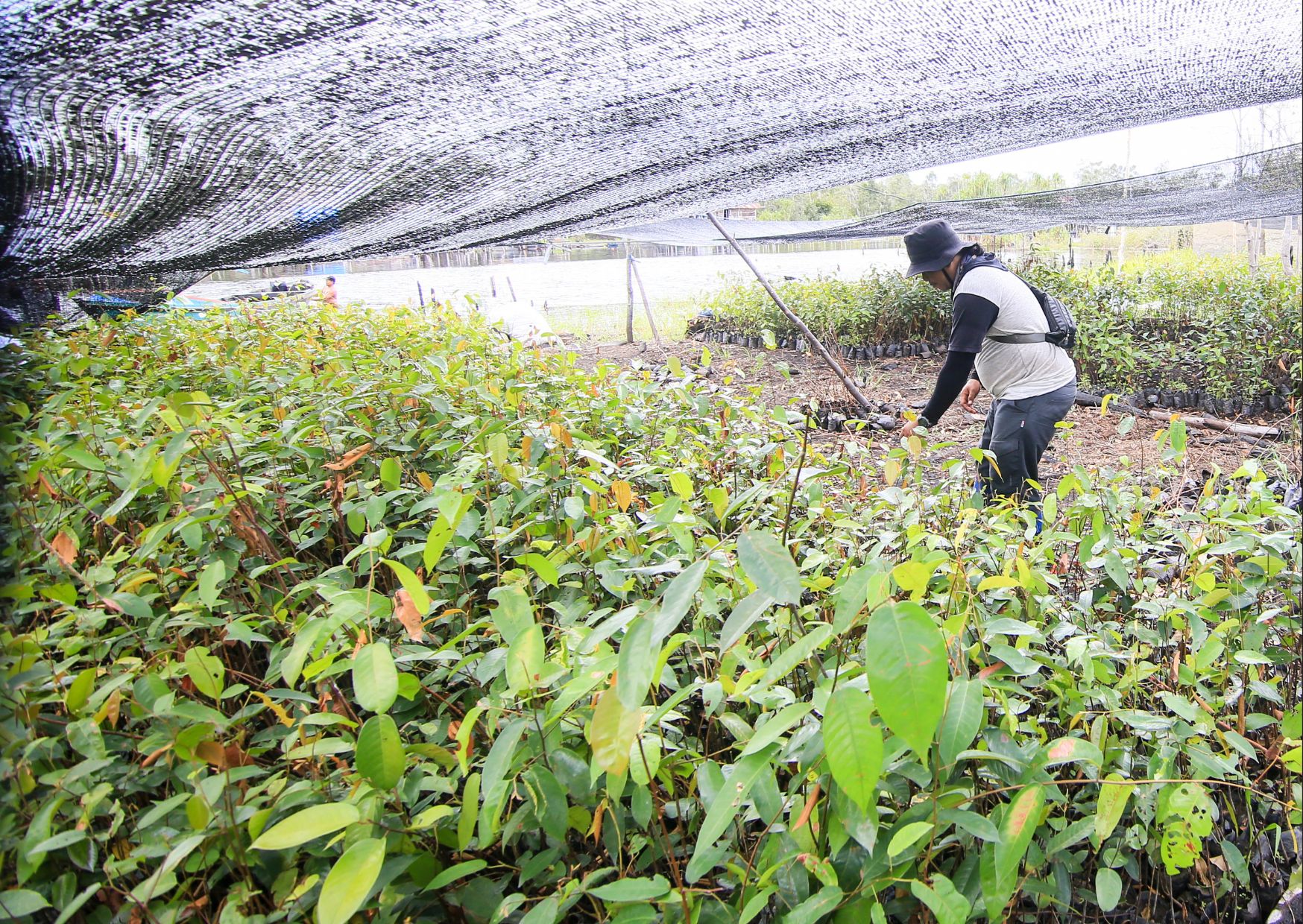
These seedlings were grown in community nurseries, which play a vital role in our restoration work. Managed by local families, the nurseries provide a sustainable source of income while supplying native tree species for reforestation. Most are located in villages bordering Sebangau National Park, but, despite this proximity, reaching restoration sites is rarely straightforward.
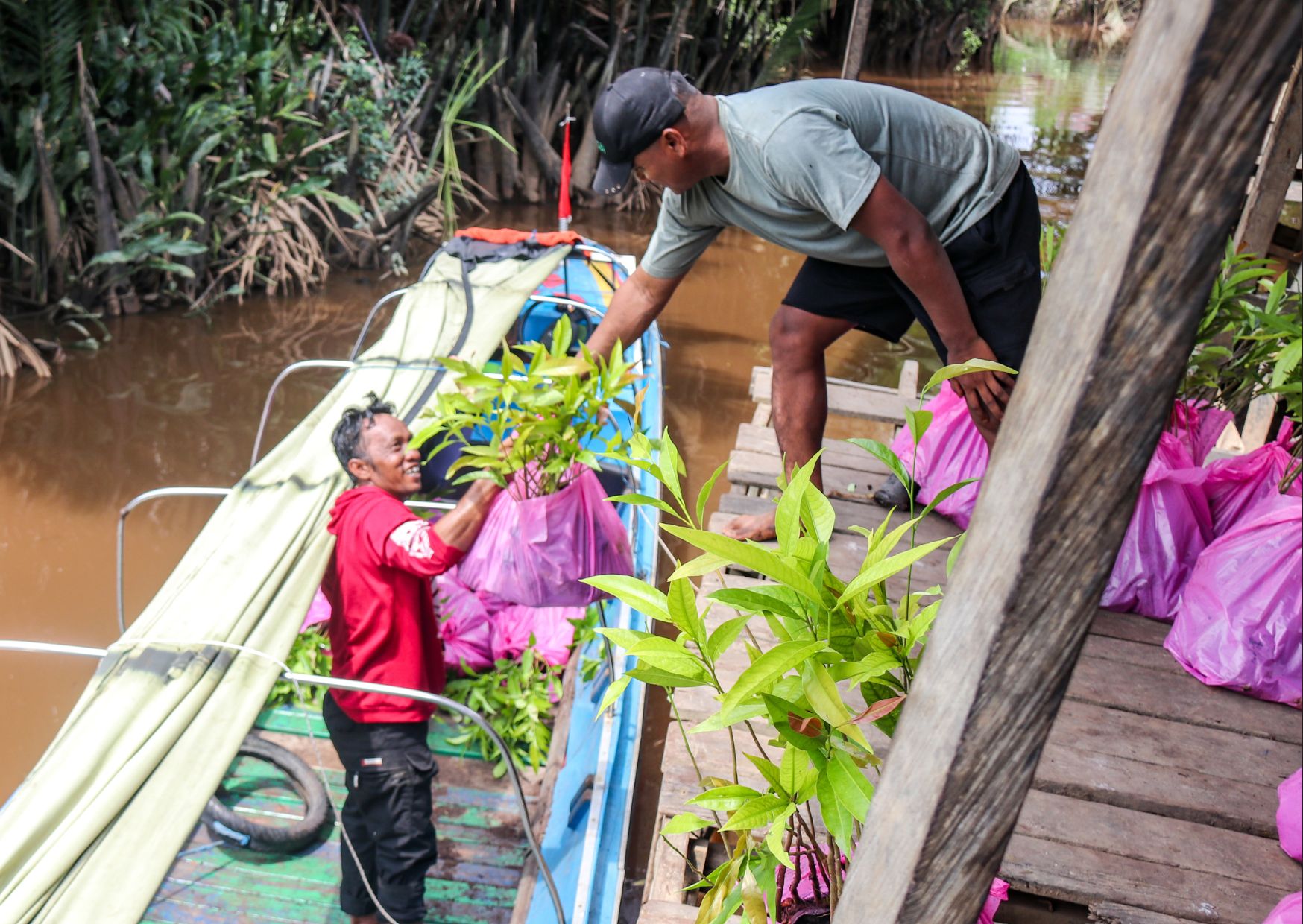
Sebangau National Park encompasses a whopping 5,000 km2 of peat swamp forest, and not all areas in need of restoration will be conveniently positioned at the National Park’s edge, or accessible by road. Moving 130,000 seedlings across this swampy terrain is no mean feat: in fact, it took 15 staff and 19 community members 12 days to complete, with sections traversed by car, boat and on foot.
Once at the planting site, the work was far from over. The seedlings were given a week to acclimatize to their new environment, improving their chances of survival. During this time, a small team of hardcore horticulturalists remained on-site to care for them, sleeping in a makeshift hut, or pondok, until planting could begin.
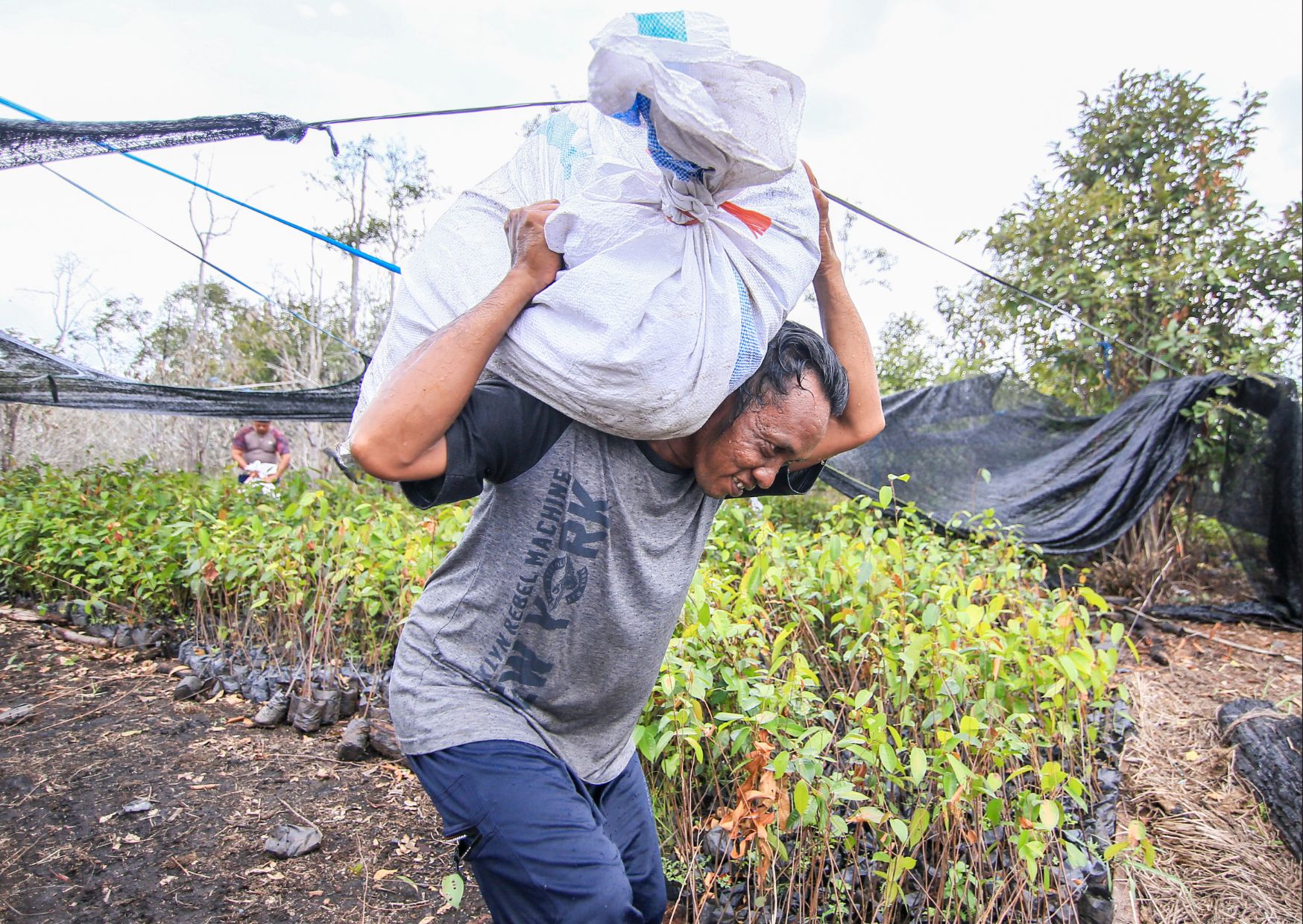
It took about two months to plant all 130,000 seedlings, even with 23 people pitching in and getting their hands dirty. To put that into perspective, assuming all of those people were planting on a full-time basis for the entire two month period, that’s roughly 125 trees per person per day!
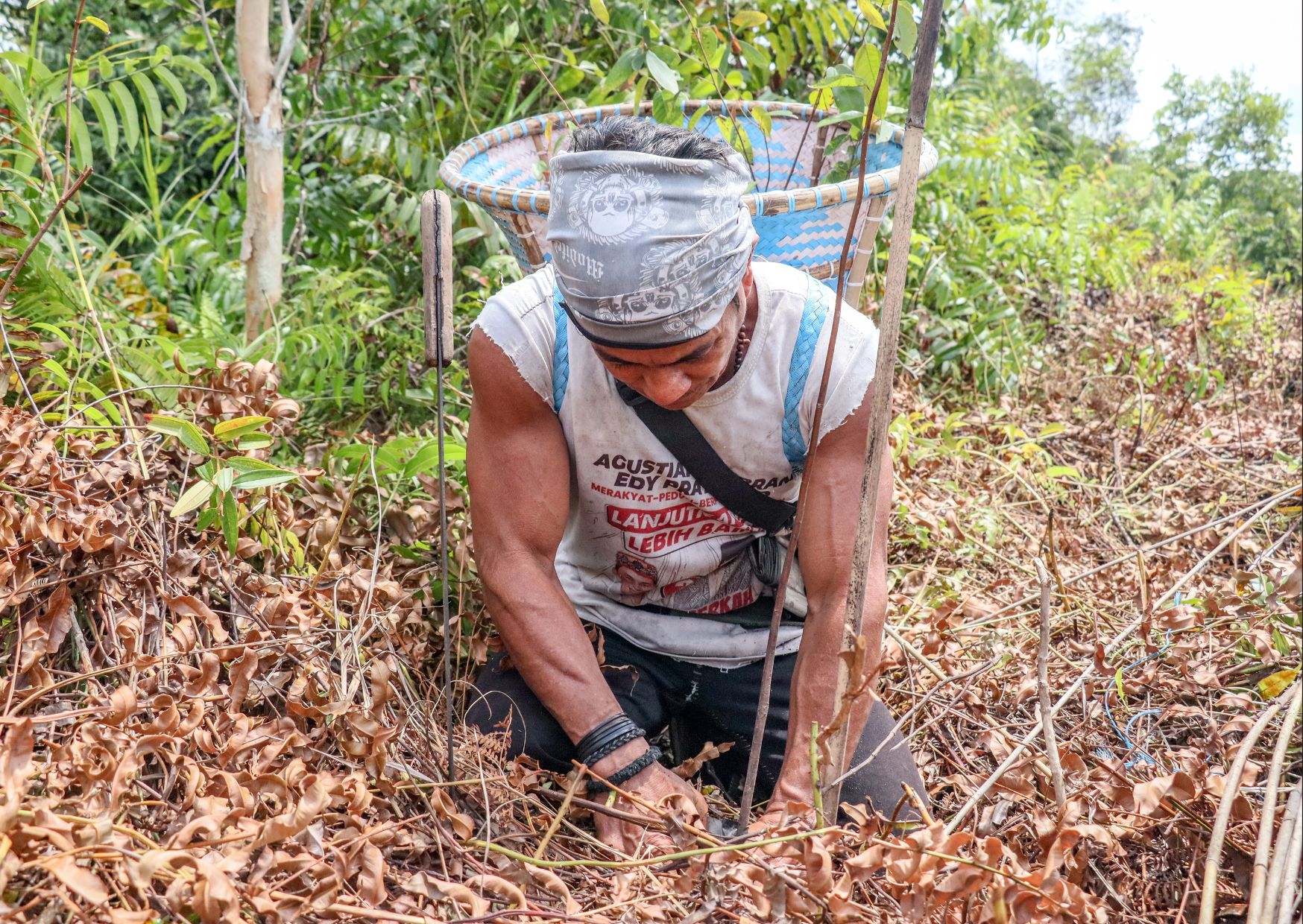
And that’s only the beginning.
As a science-led organization, our responsibility doesn’t end once the seedlings are in the ground. We conduct regular monitoring to assess survival rates and refine our reforestation strategies. We will continue to check in on the seedlings for a full 10 years—replanting if needed—to ensure the long-term viability of this patch of forest in-waiting.
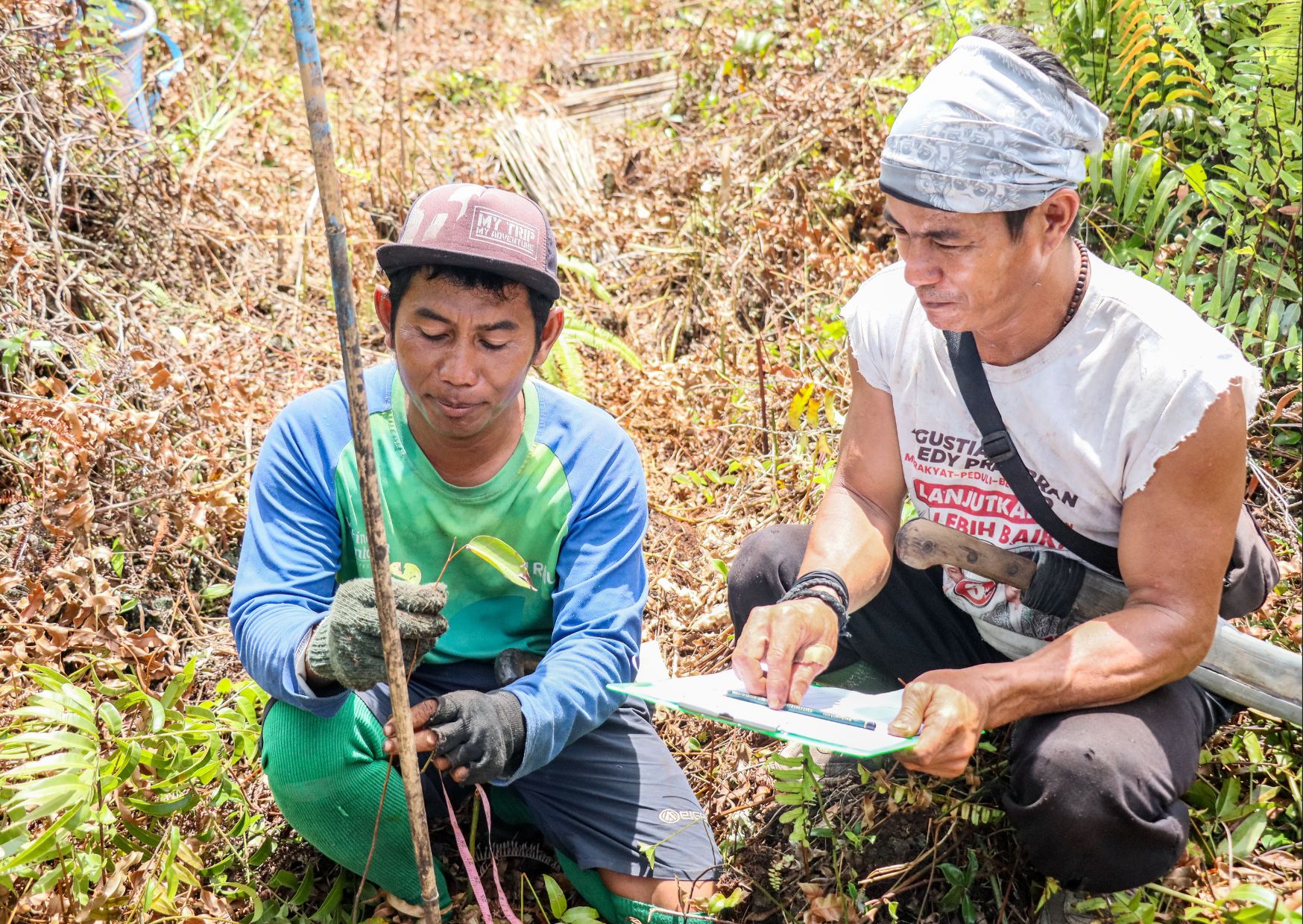
As the forest recovers, wildlife will return. Camera traps will help us document that recovery, capturing evidence of the growing ecosystem. Given time, any one of these tiny seedlings might one day house a family of gibbons, or produce fruit for a hungry orangutan!
Planting in the peat swamp may not look picture-perfect, but this is reforestation done right.
