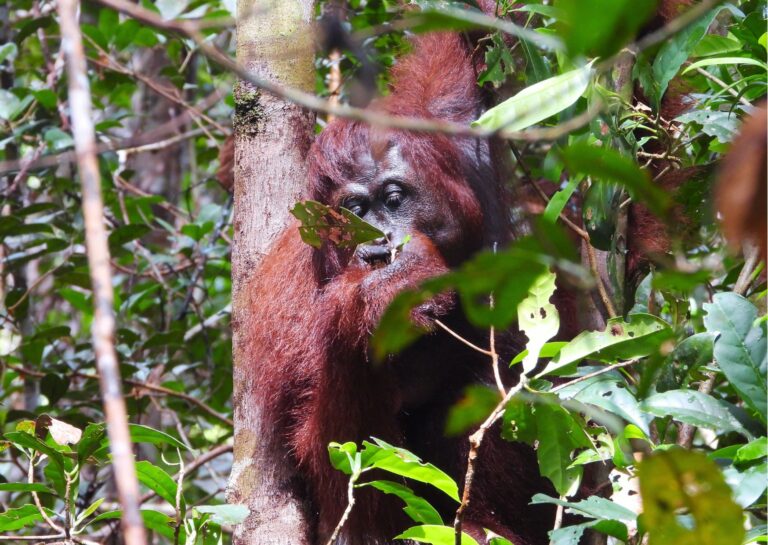
This World Rainforest Day, we’re celebrating the extraordinary rainforests of Borneo and the incredible wildlife that depends on them – including some very exciting news from the forest…
Supporting new life
In mid-June, our field team encountered Georgia the orangutan and her seven-year-old son, Gus.
Wild Bornean orangutans usually stay by their mother’s side for seven to nine years, learning everything there is to know about life in the forest before they are ready to go it alone. This prolonged education is only possible because orangutan mothers dedicate themselves almost entirely to a single offspring. As a result, females reproduce very slowly, usually giving birth just once every six to nine years.
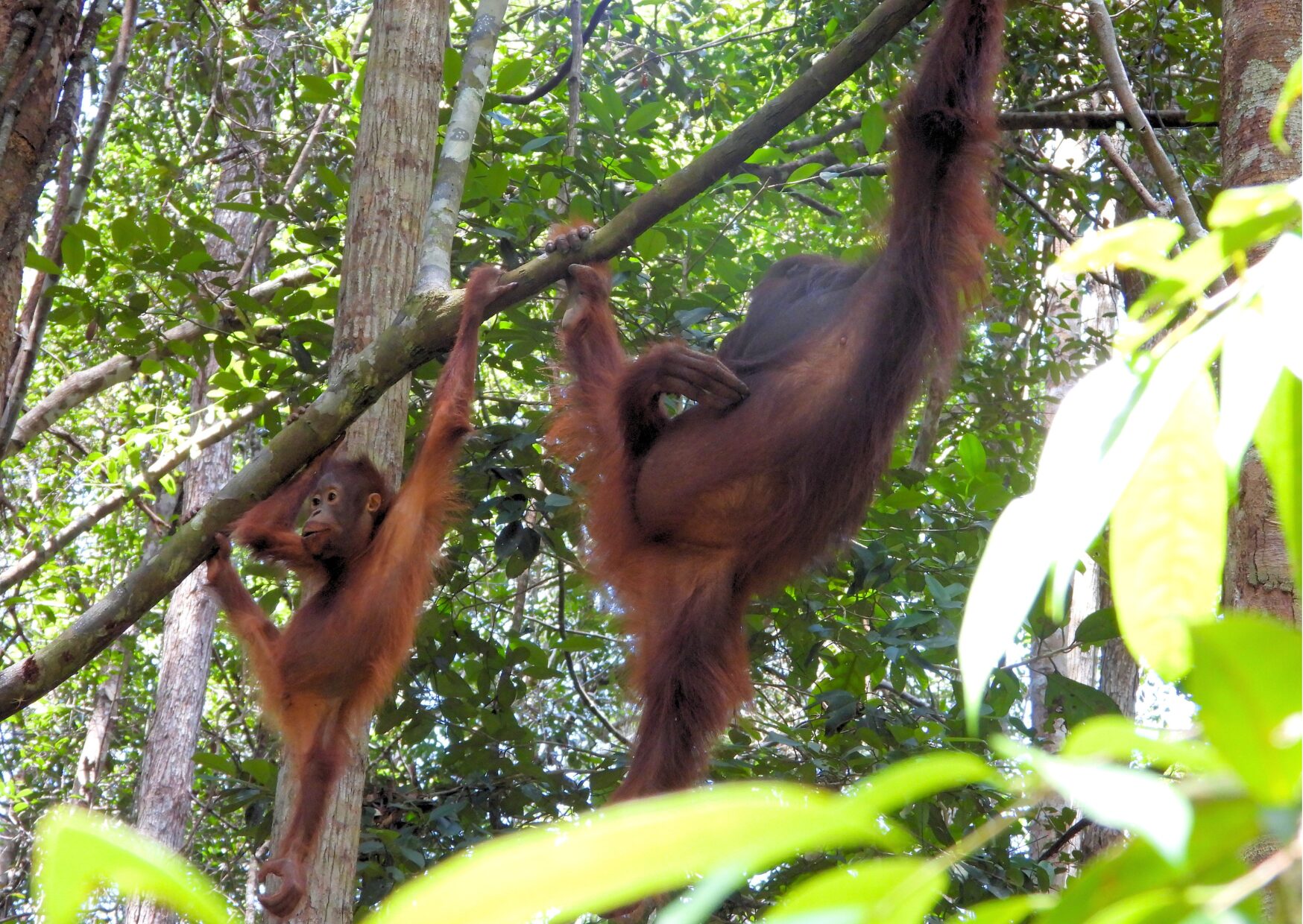
With Gus now approaching independence, our primate scientists suspected that Georgia might be preparing for the next chapter. Their suspicions grew after she was seen in the company of an adult male in May, so, on the 18th of June, the team set out to perform a pregnancy test.
While this may sound like a complicated scientific procedure, it is surprisingly straightforward: commercially available human pregnancy tests work for orangutans too, as they produce the same hormones during pregnancy. The tricky part is collecting enough urine to perform the test, which is easier said than done when the subject is perched 20 meters above the ground! However, the team eventually succeeded in getting a reading…
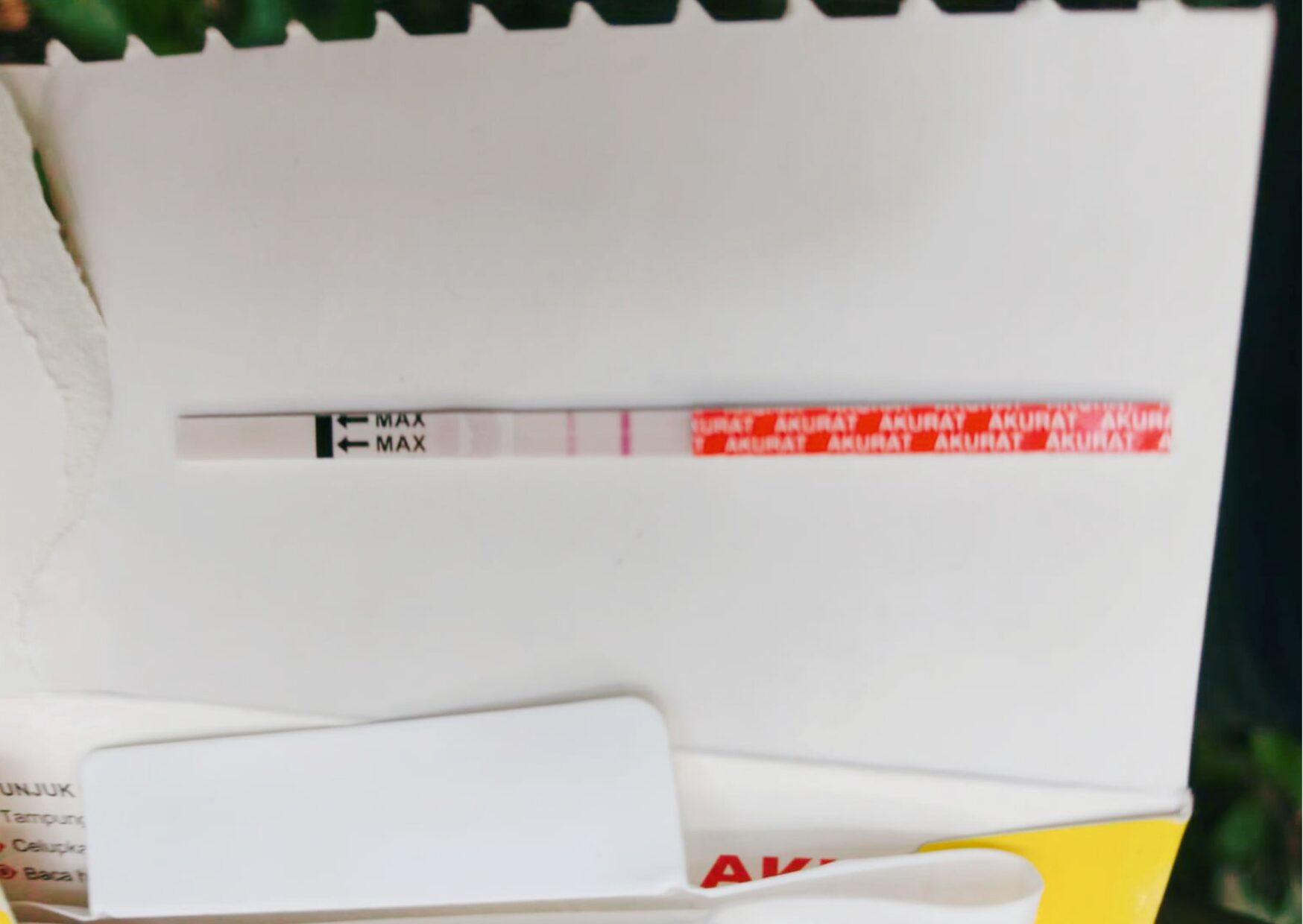
We’re thrilled to announce that Georgia is pregnant!
For Critically Endangered Bornean orangutans, every birth is a milestone. With populations threatened by habitat loss, forest degradation, climate change and fire, each new infant represents hope for the future of the species.
Rainforests matter – for people, primates and the planet
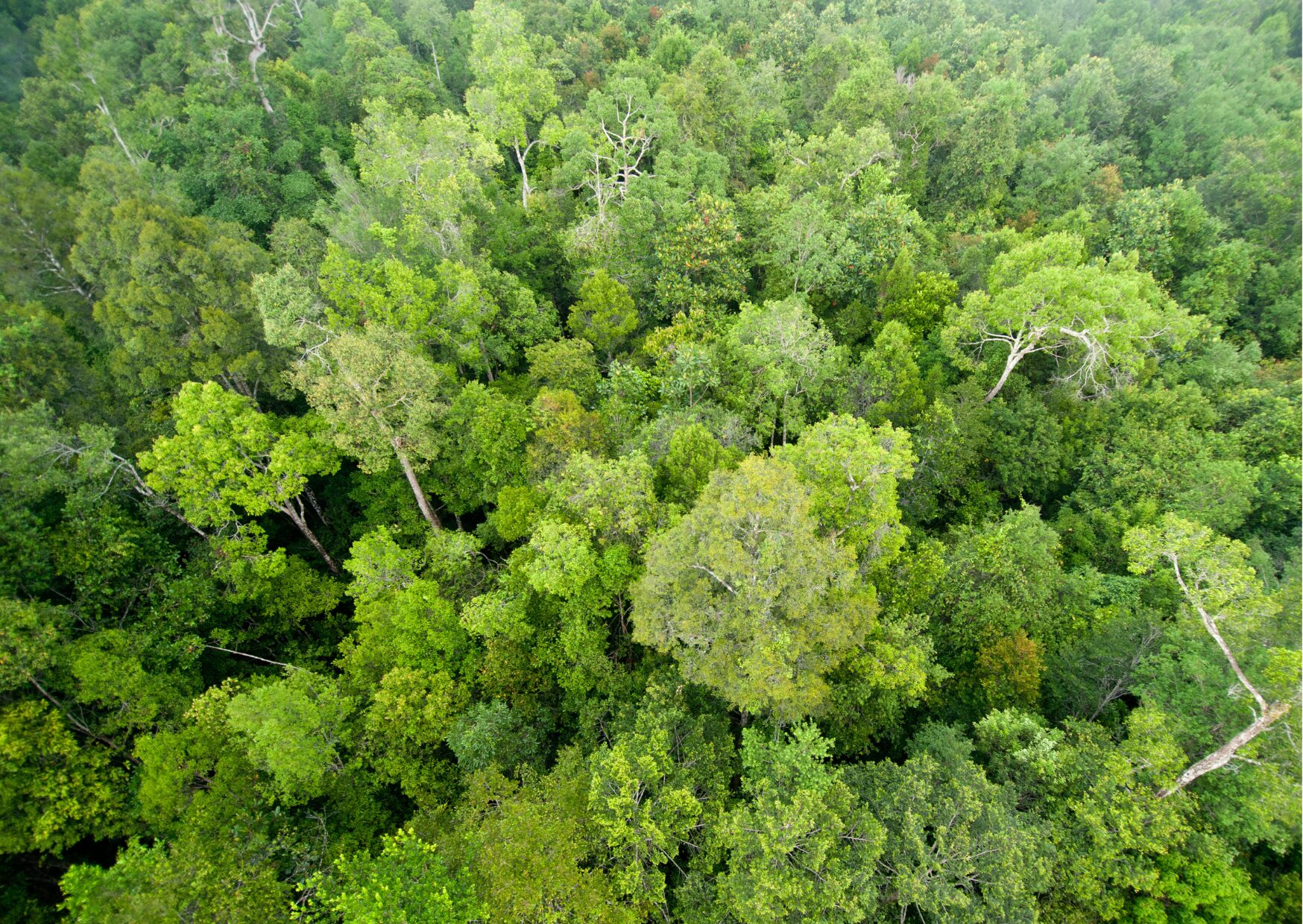
Georgia’s family lives in one of the most important ecosystems on Earth. Borneo’s peat-swamp rainforests are a refuge for an astonishing variety of wildlife, including clouded leopards, sun bears, hornbills, crocodiles, gibbons and countless other rare and endangered species. Beneath the forest floor lie deep peat deposits, vast stores of carbon accumulated over thousands of years that help to regulate our global climate.
On World Rainforest Day, Georgia’s pregnancy reminds us why protecting these forests is so important. Healthy rainforests create the conditions for wildlife to thrive, and every new orangutan born is proof that conservation can make a difference.
Be the change (by donating your change!)
We are now experiencing El Niño conditions, which bring hotter and drier weather to Borneo and significantly increase the risk of devastating peatland and forest fires.
To help protect Georgia, her growing family, and the rainforest they call home, please consider making a donation.