

Exciting news, there’s a new baby orangutan on the way: Indy is pregnant with her third child!
Indy has been part of our orangutan monitoring programme since she was a juvenile and still wholly dependent on her mother, Indah. Born in 1999, Indy has grown up alongside our research teams, who have watched her transition from infancy to independence and even become a mother herself. As a result, our teams have come to know Indy very well, so when her behaviour changed in recent months, they immediately recognised the signs of pregnancy.
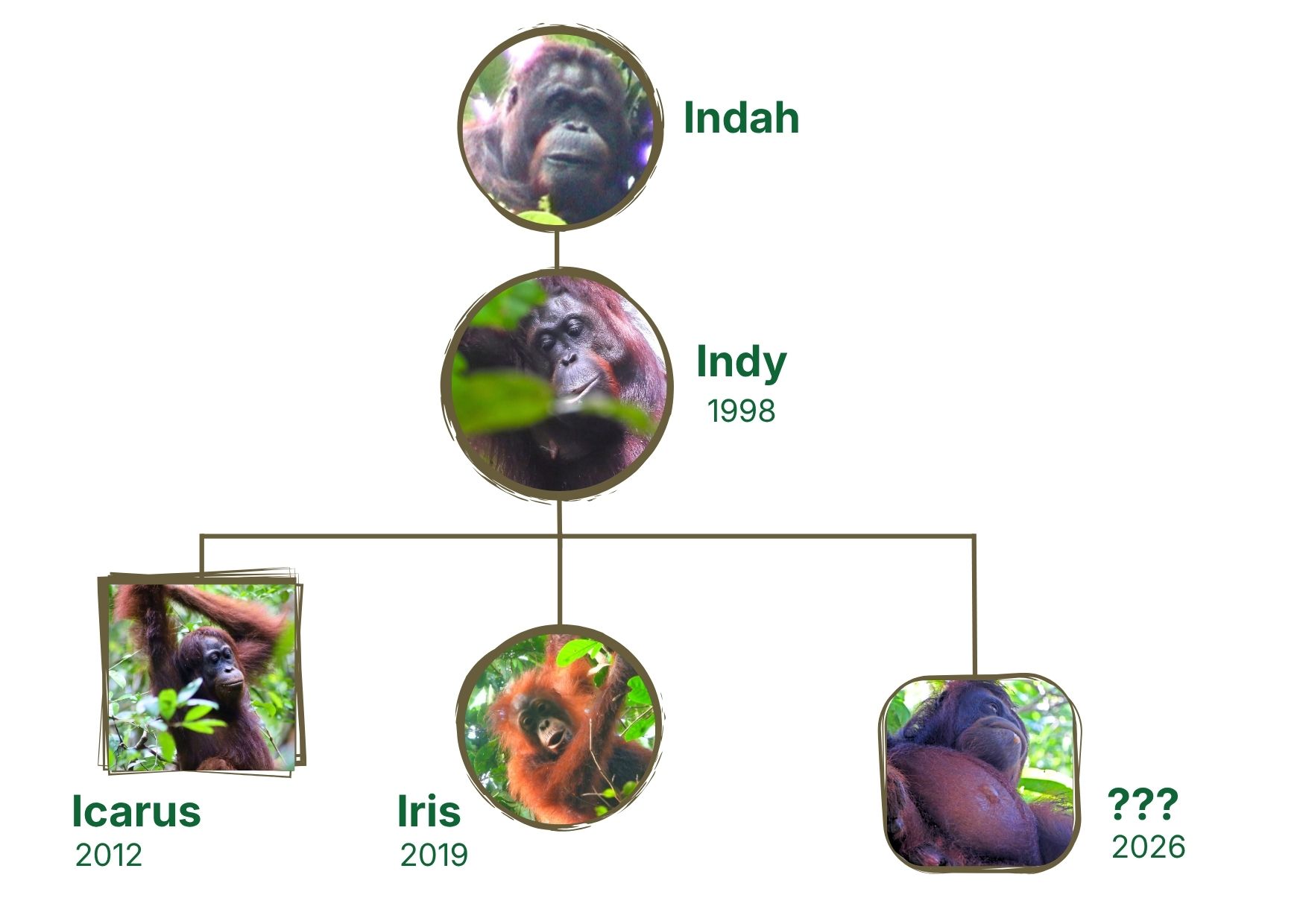
Orangutans don’t always develop an obvious ‘baby bump’, but there are other ways of identifying pregnancy. For example, pregnant orangutans will avoid males’ long calls (a romantic summons) because they have already mated. When female orangutans are ready to mate, they are usually more aggressive in their search for males and will always respond to the sound of long calls, so this change in behaviour is quite pronounced. Pregnant females are also markedly less active, travelling shorter distances and spending more time at rest – growing a baby is tiring work!
A positive outcome
These behaviours may be enough to arouse suspicion, but how can we know for sure whether an orangutan is pregnant? The answer is simpler than you might expect!
Orangutans share 96.4% of their DNA with humans and have a similar hormonal profile when it comes to pregnancy – so similar, in fact, that human pregnancy tests also work on orangutans!
But you can’t just expect a wild orangutan to pee cooperatively on a test kit. So, our orangutan researchers found themselves waiting around for Indy to urinate before swooping in to collect any salvageable drops from dry leaves on the forest floor. It’s unglamorous work, but oh so rewarding when the results are positive!
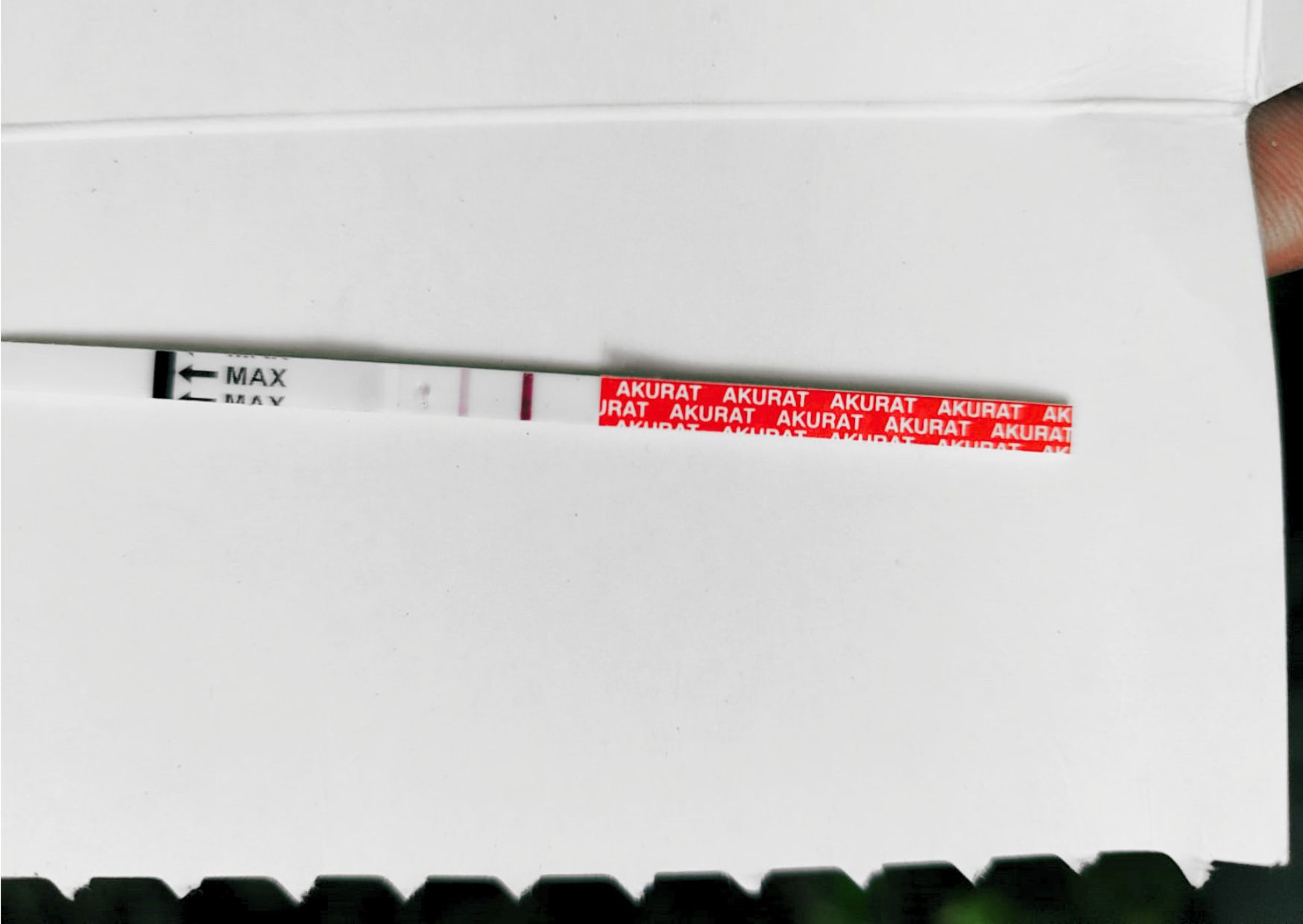
For Critically Endangered Bornean orangutans, every individual matters.
Indy’s pregnancy is a hopeful sign that conservation efforts in Sebangau National Park are working. Home to more than 6,000 wild orangutans — the largest unfragmented population on Earth — these peat-swamp forests provide a vital refuge for Indy, her growing family, and the future of the species.
With forecasters predicting a severe fire season later this year, help us protect Indy’s rainforest home in the face of flames. Donate today.


