

If you want to understand a rainforest, start with its trees.
After all, physical framework around which much of the ecosystem is organised, as well as being an important carbon store and a key source of food, shelter and nesting sites for countless species. Their growth is influenced by the conditions around them, while at the same time their presence helps shape the environment in which other plants and animals live.
Understanding these relationships is central to our conservation work. We facilitate research that helps us understand how Borneo’s rainforests function and change, and use that information to guide our habitat protection and restoration programmes.
And that means our scientists spend a lot of time measuring trees. A lot of time. Thousands of trees every year.
Why?!
Well, it’s not just because we’re a bunch of tree-lovers who enjoy nothing more than a good bit of tree hugging, but because measuring trees serves an important purpose.
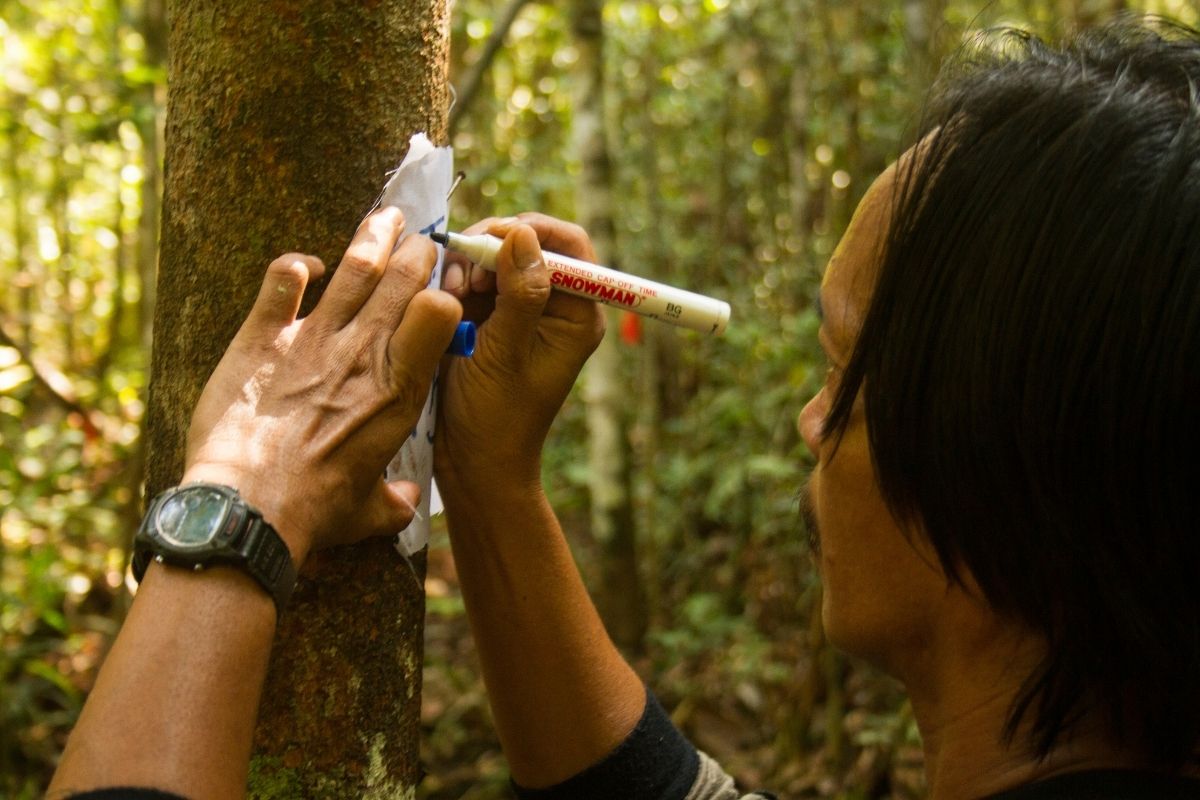
By monitoring changes in tree size, density and the diversity of species present, we can build up a picture of how the forest is changing over time. Increases in tree size or species diversity may suggest a recovering forest, whereas decreases may indicate a problem requiring attention.
Trees also provide food for forest animals. Orangutans, for example, consume fruit as their main food, sprinkled with side orders of flowers, leaf shoots and, when desperate, bark. Measuring trees therefore gives us an indication of the food resources available to the wildlife we aim to protect.
In other words, a tree measurement might tell us something about much more than just the tree itself.
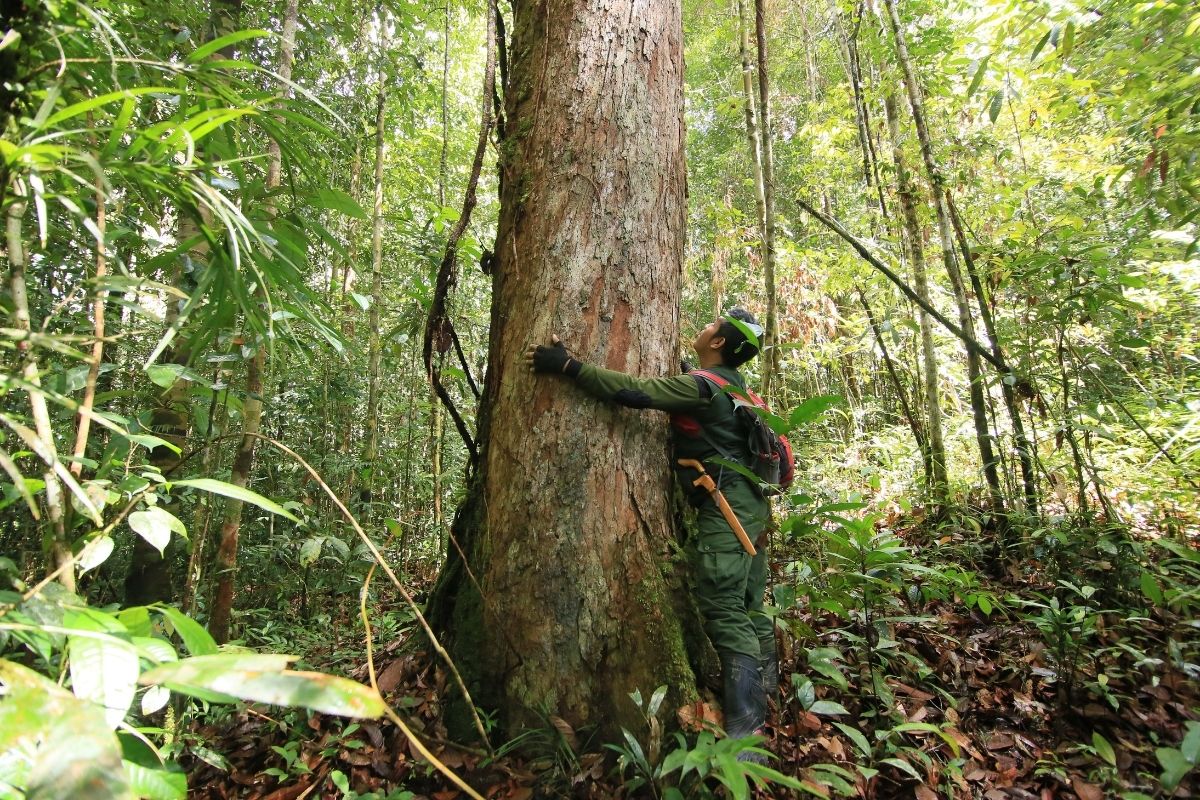
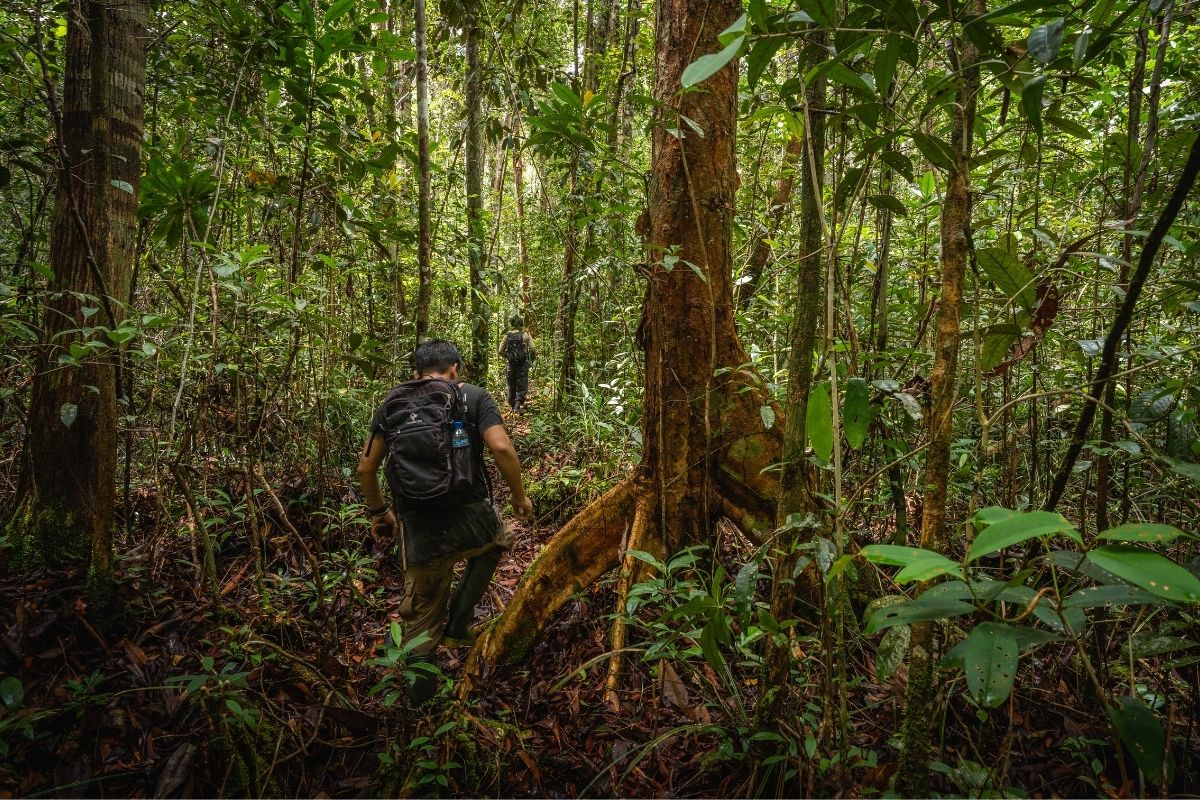
Our field team has been measuring trees in 2.4 hectares of fixed plots in the Sebangau peat-swamp forest since 2003. Within these plots, we measure more than 2,000 trees every two years.
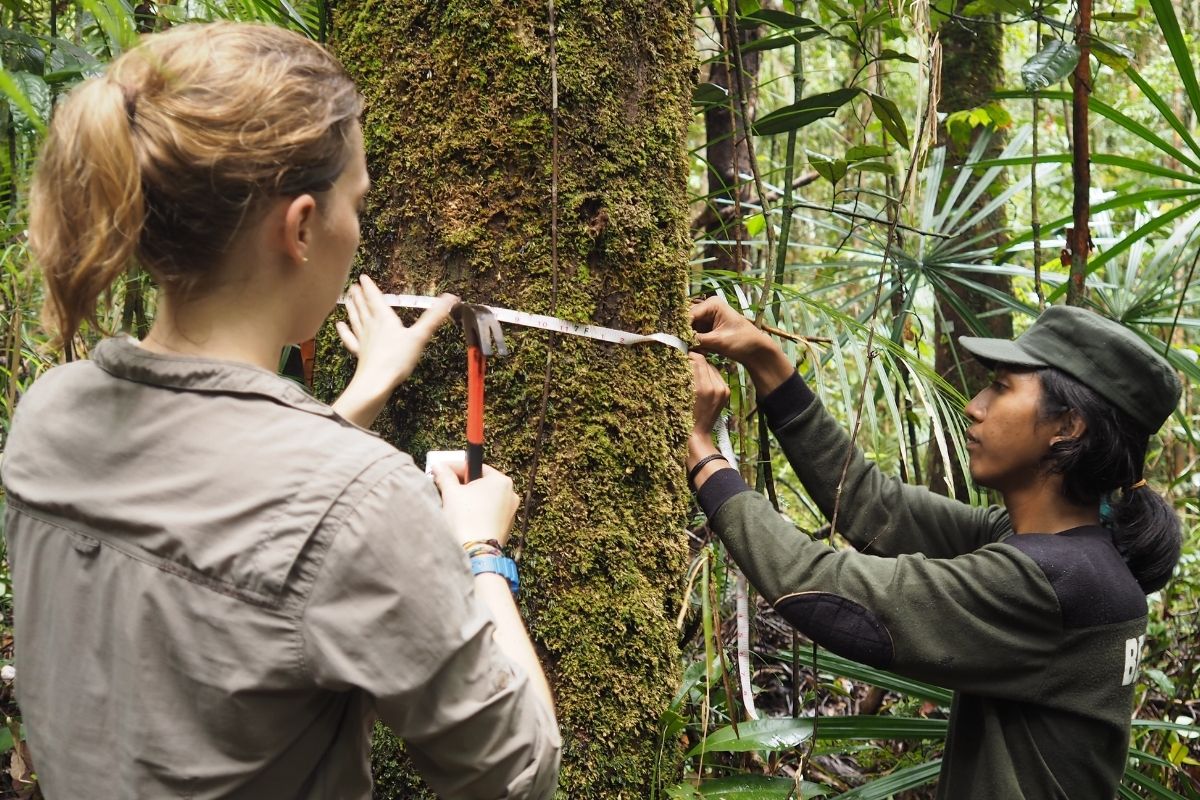
We record their diameter at the base and at breast height, adding younger trees once they have grown large enough to be included in the sample, and removing trees from the dataset when they die.
It may sound like a lot of measuring (and it is!) but doing this consistently over many years allows us to literally plot long-term trends in tree density and size. We can then look at these trends in relation to changes in human activities and conservation management in the area.
And after more than two decades of measurements, we are starting to see some very interesting patterns.
The forest is bouncing back
Looking at data from 2003–2025, we can see an increase in the density of larger trees (and a corresponding decrease in the density of smaller ones).
This is contributing towards a trend of increasing tree size, biomass — the calculated total weight of trees per unit area — and the amount of carbon stored in the trees.
So, what does this mean?
Simply, it indicates that the trees are growing as the forest continues to recover from past illegal logging disturbance prior to protection of the site in 2004.
In this case, fewer small trees and more large trees, alongside increasing biomass and carbon storage, are consistent with a forest that is continuing to develop following past disturbance.
This is what we would expect if the forest is gradually approaching its original, pre-disturbance condition again — and that is very good news.
In it for the long haul
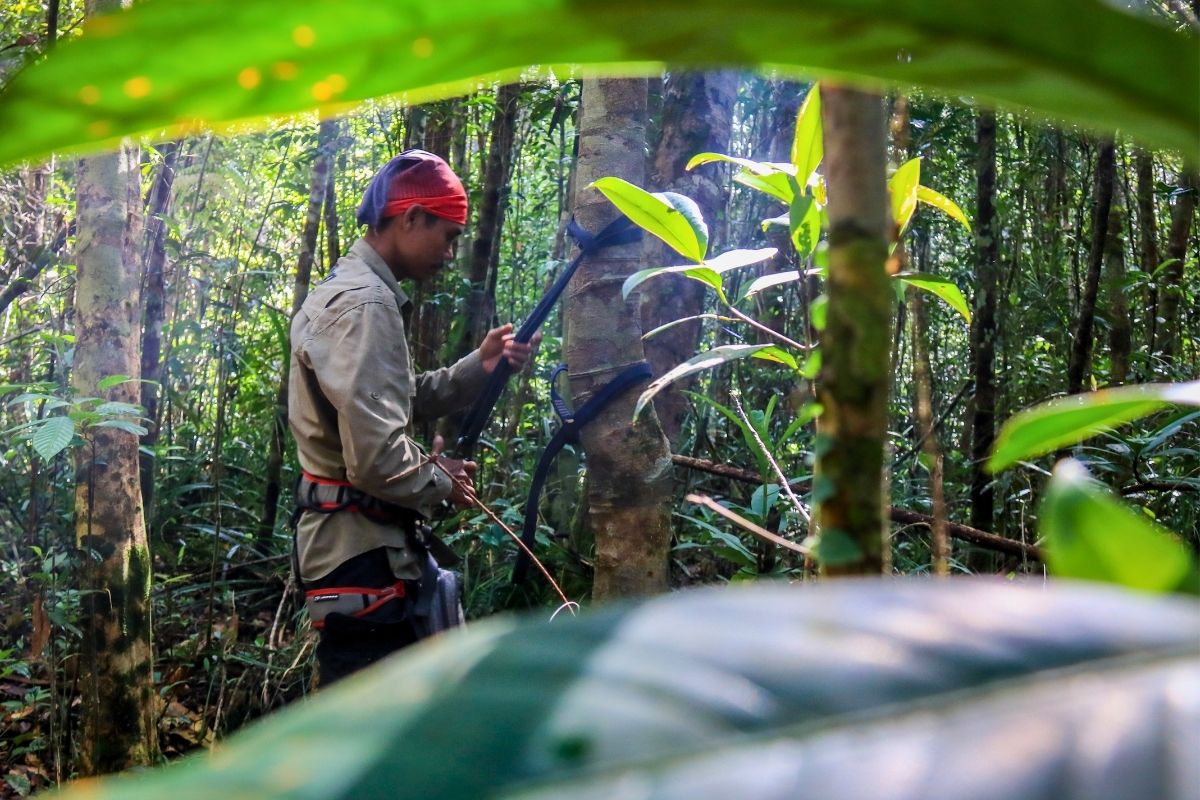
Long-term monitoring allows us to test whether the forest is changing in the way we would expect following protection and restoration. It gives us evidence of how the ecosystem is recovering, helps us identify changes that may require further attention, and provides information that can feed into future conservation decisions.
The trends we are seeing suggest that our efforts to protect and restore the forest are producing the desired positive impact. The forest is continuing to recover, trees are getting larger, and more biomass and carbon are being stored per hectare.
That is an encouraging finding for us — and, of course, for Sebangau’s fruit-guzzling orangutans!
It’s also a reminder that conservation takes time. A forest does not recover overnight, and some of the most important changes can only be detected when we have the patience to keep measuring, monitoring and learning over many years.
Thousands of trees and decades of data under threat
Our findings give us real reason for hope. But with El Niño increasing the risk of severe fires this year, two decades of hard-won progress are once again at risk.
Donate today to help turn vital scientific monitoring into the protection and restoration action Borneo’s forests urgently need — and help safeguard the future of these globally important ecosystems.


