An emergency update from Simon, Co-founder of Borneo Nature Foundation
Firstly, I want to thank you for opening this email, staying connected to our work and the fire situation that impacts all of us – wherever you’re reading this from.
As you’ll probably be aware, fires are ablaze across Borneo, driven by a Super El Niño event, the strongest this century. Drought has taken hold in drained and degraded peatland throughout the coastal lowlands. It’s here that our 25+ year effort to protect and restore rainforest is concentrated. My life’s work, and the work of so many more. The Sebangau National Park is under direct threat, with fires currently burning inside the park borders. We are at the forefront of efforts to protect it, one of the last strongholds of the Bornean orangutan, home to one of the largest carbon stores on Earth.
I want to give you a full, honest update on the situation on the ground, what we are doing and what we need. Having met and talked with all our teams over the past couple of days, I am writing this from our headquarters in Palangka Raya city in Central Kalimantan, wearing a face mask to protect from the choking haze that easily seeps into buildings here. This brings back memories of 2015, the last time we faced such devastating fires. Back then, our teams spent weeks in the field fighting fires deep inside the forest, tirelessly working day and night to protect what we could. It was terrible, frightening, and yet we stood in the way. From then on, we vowed to commit all our resources to being fully prepared in the future.
We did just that. Through your support, we transformed Borneo Nature Foundation into an effective, multi-landscape, locally-grounded NGO, addressing the root causes of fires and hugely expanding our area of work. We scaled up the network of community fire-fighters, increasing our ability to effect change in the region on many fronts.
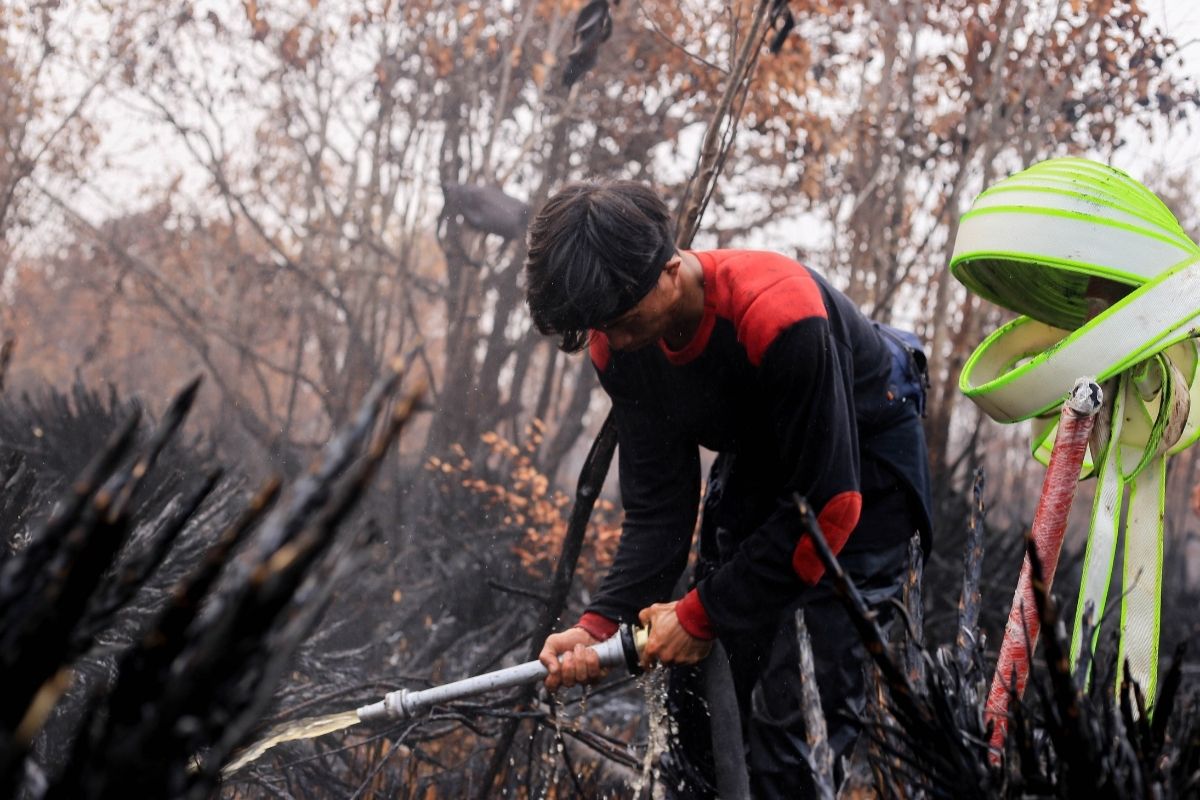
In 2015 we supported one community fire-fighting team.
Now we have established eight more teams (called Masyarakat Peduli Api, or MPAs) with 138 total members, and supported four independent teams too. We provide equipment, ongoing training and operational support so they can provide an emergency response when called upon.
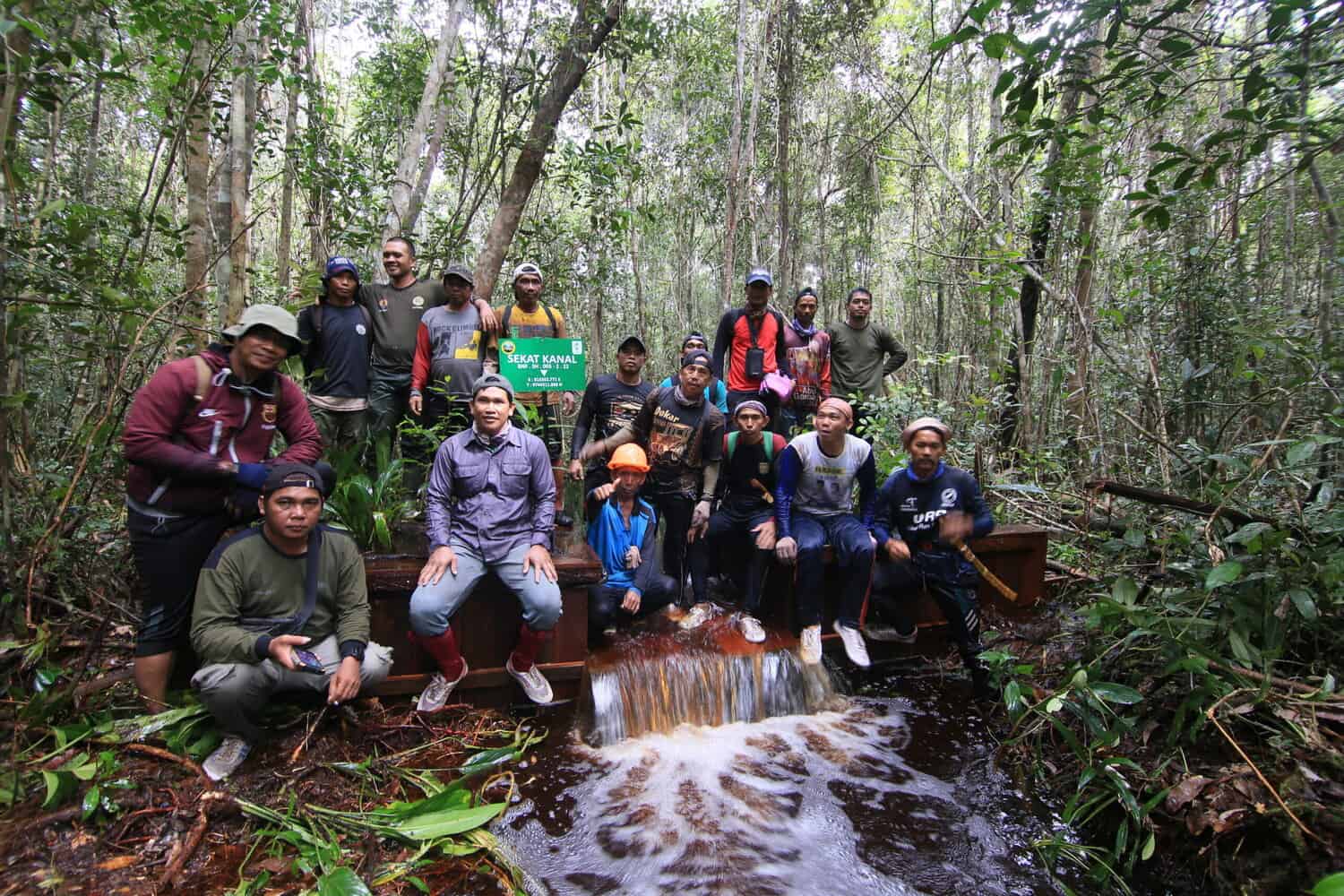
We have built over 1,000 dams to block illegal logging canals that have drained peat swamp, returning it to its fireproof state.
We have planted almost 1,000,000 trees to restore burnt peatland, creating a fire buffer.
We’ve worked with communities to encourage safer farming and fishing practices to reduce reliance on drainage and burning.
We’ve launched educational campaigns about the causes and dangers of fire.
We’ve drilled hundreds of boreholes to provide a consistent water source for fire-fighting teams.
We’ve trained operators to use drones mounted with thermal sensors to detect and track fires, and introduced a more effective foam-based fire-fighting technique as standard.
We have supported the development of a new regulation on fire by the Palangka Raya Mayor, which has secured local government funds for fire-fighting efforts and the creation of a city-wide fire management master plan including a fire early-warning system.
We’ve implemented government regulations on climate change adaptation in rural villages; provided peatland fire-fighting training far and wide; and supported coordination structures between the community MPAs, the National Park management, the National Fire Service and the regional Disaster Management Agency.
I could go on…
And now the moment of truth
Peat fires are burning once again in farmland, scrubland and forests throughout Borneo – as we unfortunately expected would happen again one day, despite all efforts. Climate change has led to longer and more severe droughts in southern Borneo, and may have influenced the increased frequency and strength of the El Niño climate event that brings the most extreme droughts. Cities and towns have grown, expanding housing, roads, farms and plantations ever closer to the forest, shrinking the buffer between the protected forest and developed land. Dry, drained peat is a tinderbox and takes many decades to fully restore. And it only takes one person to start a fire, which then spreads out of control.
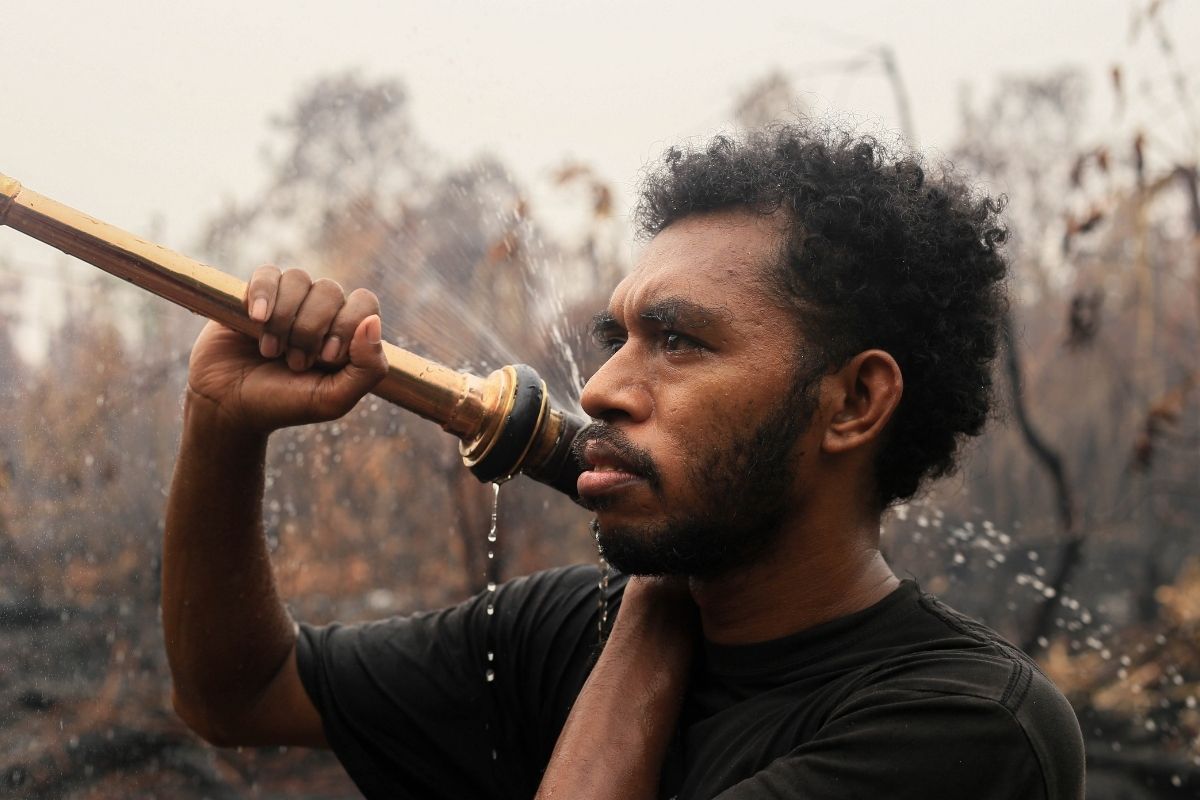
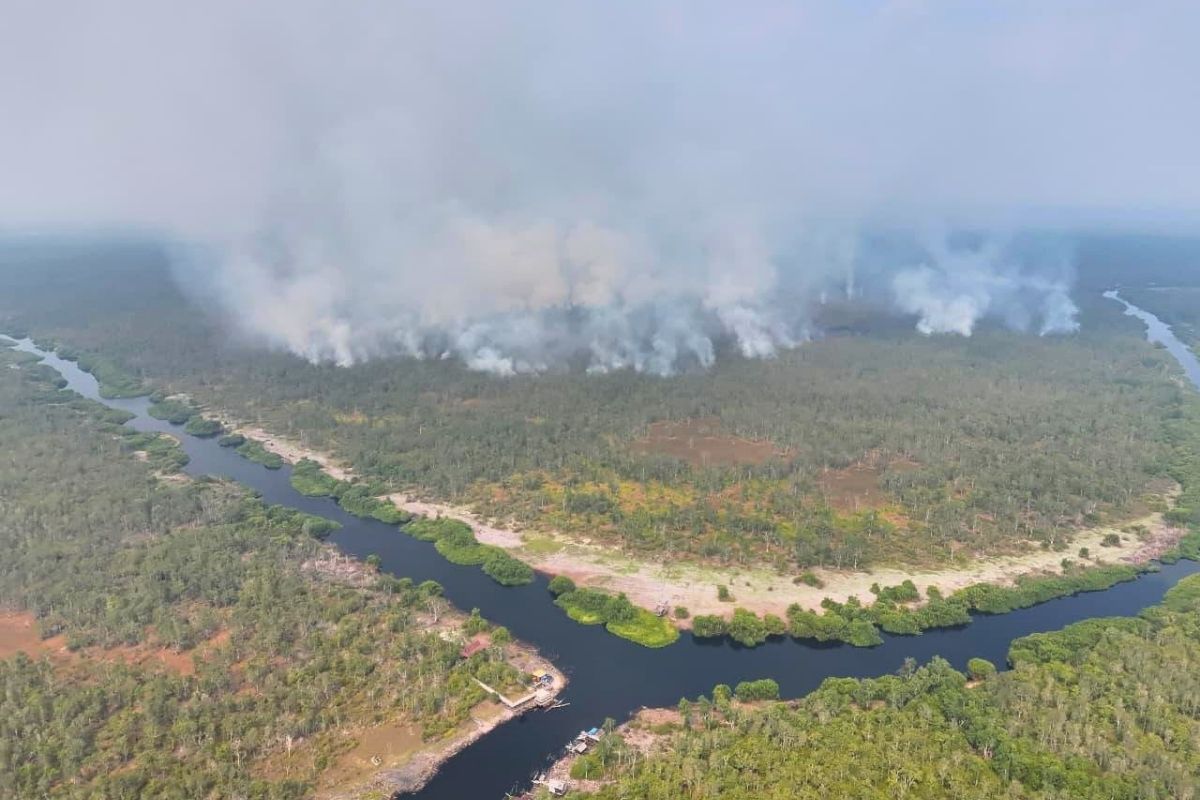
Fires started burning in early August. Today, there are fires burning in multiple locations, including a single fire front over 30 km long on the north-eastern border of the Sebangau National Park. Burning through degraded peatland and reaching the forest edge. The community fire-fighting teams we support are a central part of a coordinated emergency response. They have beaten back fires in multiple locations, extinguishing them before they could take hold in the forest. They spend days and nights patrolling, standing guard and responding to new fires as they erupt. A testament to their dedication. A large fire is burning out of control on the opposite bank of the Sebangau River, here the village MPA is patrolling and monitoring it 24-hours to so they can take action if it manages to cross the river. This scene is repeated to the south-west and north-east, communities mobilised and drawing on their training and the resources we supplied to protect the forest. Several MPAs to the north are working to protect their villages and specially protected customary forests. Our research partners CIMTROP are dividing their resources between patrolling the core research site and fighting large fires on the University campus in the heart of the city. And for the first time ever, fires are spreading into heath forest habitat too, not just in the peatlands.
The 30 km fire front is posing our biggest challenge: fires spreading in hard-to-reach areas, peat burning between our access route and the forest, and river water levels so low in the river that we cannot bring equipment directly to the head of the fire. Water-bombing helicopters have helped, and for the past two weeks our teams have painstakingly broken the lines, surrounded and cut off the fires. Reforestation sites have been lost but not without a fierce struggle. Firefighters – and many of our research and restoration staff – are standing guard, protecting their successes.
We are patrolling forests and rivers and monitoring hotspots throughout the region, and are paying special attention to our newly planted areas, with water access holes being drilled as we speak.
I will continue to update you on the situation as it develops
We are currently spending about US$100 per day per team to keep them equipped, fed, safe and coordinated, and we owe them a huge debt of gratitude as they work in extremely difficult and dangerous conditions to protect the forest and, indeed, the global climate. They are protecting their home first and foremost, their families and livelihoods. Unlike traditional wildfires, it is the haze that is most damaging. Smoke toxins settle in the water, killing fish; crops are suffering, as well as people’s health. This, and the forecasts, suggest that the rains are still a long way away.
We are eating through our emergency reserves, but will endeavour to commit whatever resources we have to this – and if you are able to do the same, to dig deep to help us save this forest, the orangutans and the countless other animals that depend on it, now is the time.
Support these brave firefighters in their time of need; all of us here will be eternally grateful. We know that all our friends and colleagues, the length and breadth of Borneo are dealing with the same crisis and are also in need. We know this will be a long and arduous fire season, and that we may not be able to save everything, but whatever you are able to do, even sharing this email or our posts really help.
Keep our teams fighting, keep them equipped, fed, watered and achieving more successes. We know you care; you’re reading this, you know how important these ecosystems are for everyone, everywhere. We’ve never been so prepared to fight fires; you can help supercharge this effort in the face of the Super El Niño.
On behalf of everyone at the Borneo Nature Foundation,
Thank you
Simon
P.S. Our friends at Big Cat Rescue are currently match funding all donations up to $25,000, so this really is the best time to donate!