An update from Simon Husson, Co-founder and CEO of Borneo Nature Foundation International
Six weeks have passed since I last wrote with news of the severe fires burning across Borneo’s peatlands and our efforts to fight them.
Over this time, the El Niño-induced drought intensified, with fires spreading across Borneo’s carbon-rich, biodiversity-rich peatlands, destroying forests and releasing a toxic smoke haze that blanketed villages, towns and cities for weeks. Here in Central Kalimantan, the brave men and women of the firefighting teams we support, working alongside our field teams, were tirelessly protecting forests and community lands.
On 25 October, as the situation was becoming increasingly desperate, heavy rain finally fell. And again the following day, and the day after that, with rainfall continuing across much of the island for almost a week. The haze cleared and fires were dampened down, allowing our teams to move in and extinguish them. At the time, we hoped this marked the beginning of the rainy season, but this was not the case and a subsequent week without rain saw hotspots reappearing on satellite maps. Fires reignited along the Sebangau River, just south of our research camp, spreading through vegetation along the riverbank.
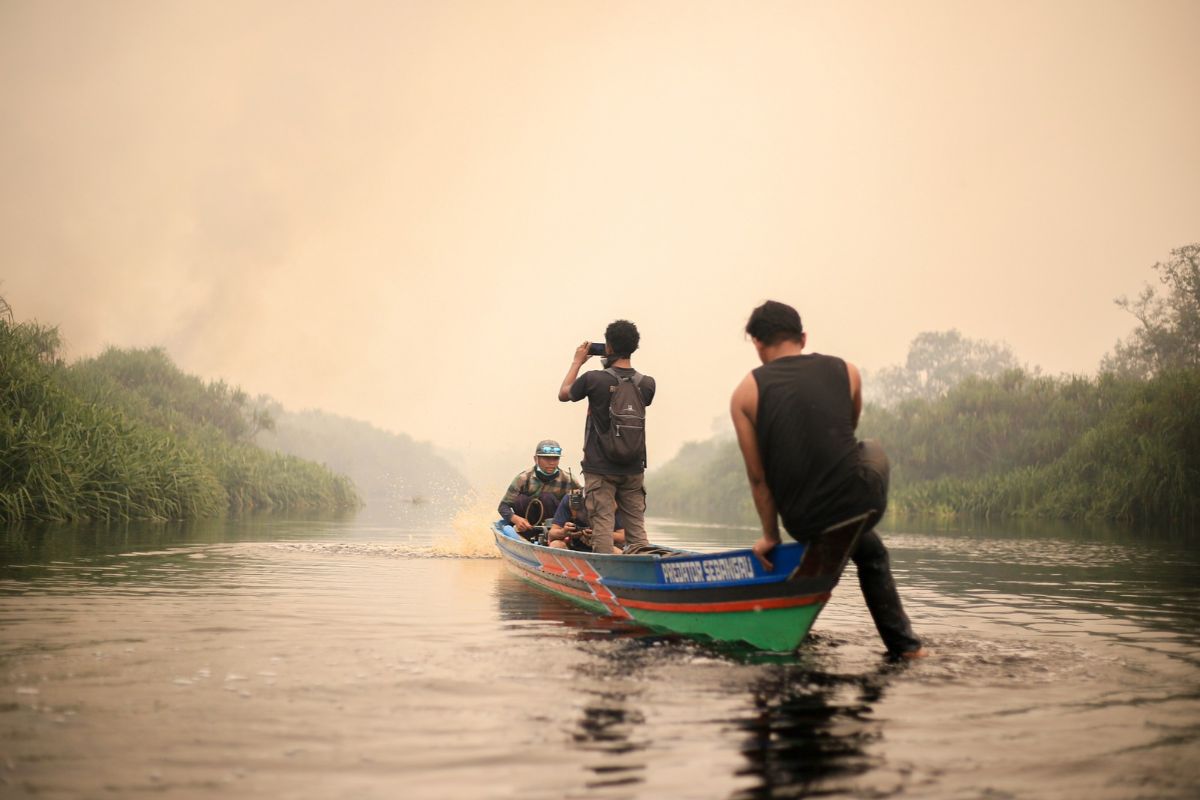
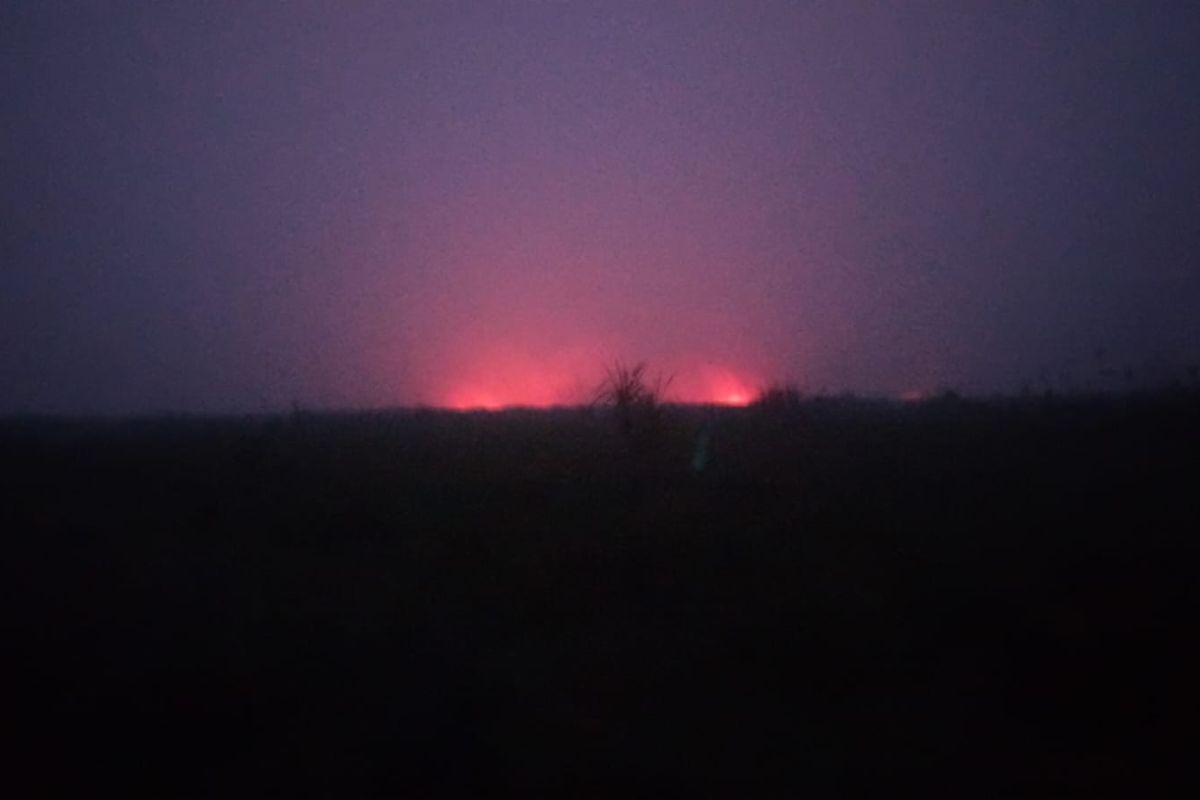
It was quite a rollercoaster. I had arrived in Palangka Raya hoping to find clear skies, but the haze was thickening and once again blocking out the sky and lingering on my senses. In Kereng Bangkirai village just outside Sebangau National Park, I met members of the our patrol team and our partners CIMTROP who manage the research facility, together with BNF’s Integrated Fire Management coordinators and many of our field research staff too, all loading equipment into boats to tackle the fires. By the time I reached camp, the night sky was glowing pink and orange from the flames just one kilometre away. This was scary and we feared what might happen that night. Thankfully, the teams mobilised quickly, set to work, and just as they were getting the fires under control, a huge raincloud appeared on the weather radar. Twenty minutes later, thunder and lightning arrived and the heavens opened. Between the efforts of our teams and the rain, the fires were put out.
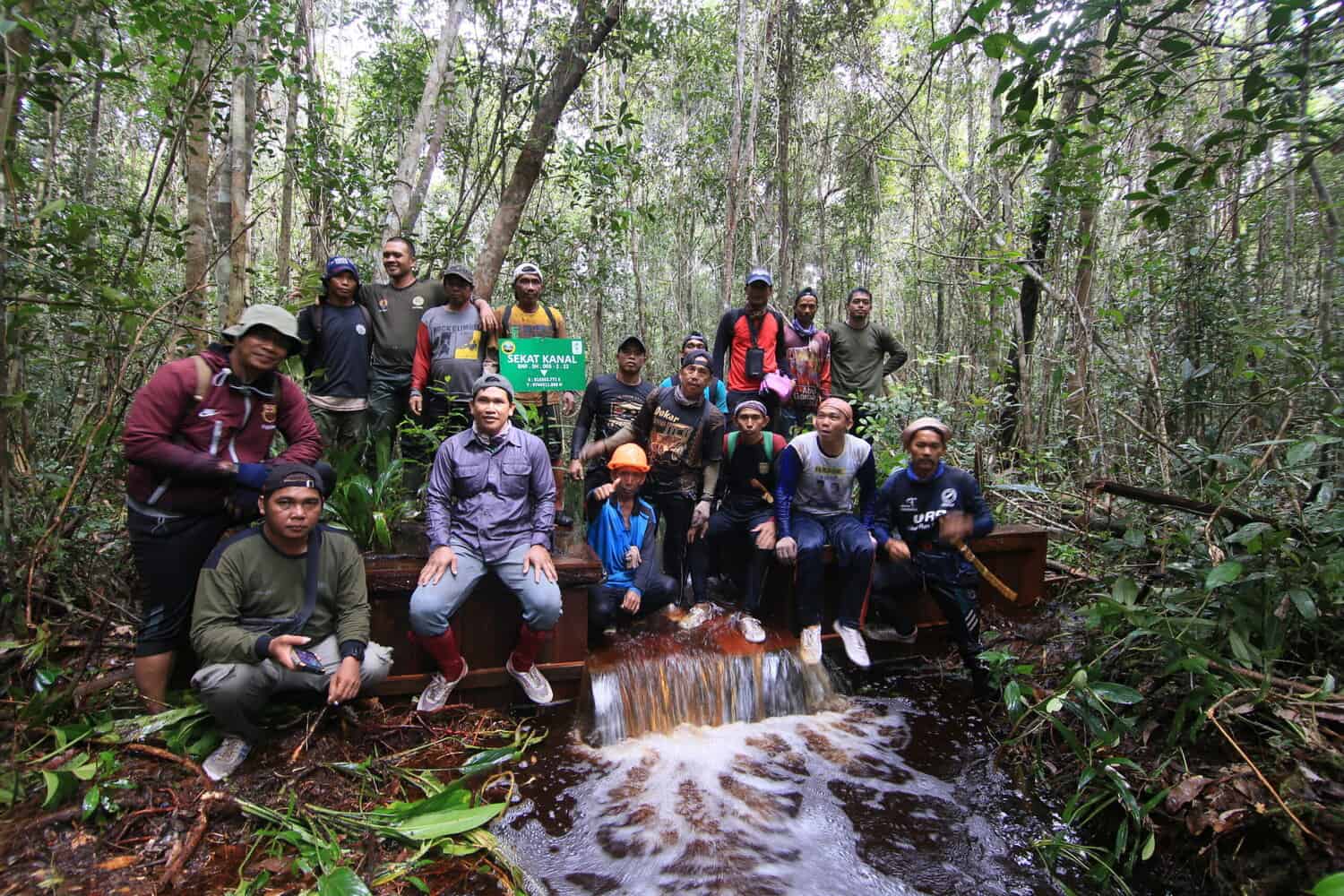
The respite provided by rain was desperately needed. We have been fighting fires for three months with huge resources committed to tackling a 30km fire front in the north of the Sebangau National Park, alongside multiple fires breaching the Sebangau River and threatening the forest. We mobilised nine community firefighting teams and supported government agencies, coordinating efforts around the clock. Teams eventually broke through the fire front, isolated and extinguished multiple fires, including the damaging Hiu Putih fire in one of our reforestation zones. Many hectares of forest and several reforestation sites were lost, but coordination between community teams, the Park Authority and the Indonesian Fire Service proved critical. Further south, dams we had built on drainage channels continued to hold back water deep into October, when it was needed most, helping maintain the forest’s resistance to fire and virtually no forest has been lost here.
Elsewhere, our teams prevented fires crossing into the park in the Bangah region, while rapidly spreading fires in the south-west threatened nearby villages, coming dangerously close to homes, mosques and schools. Our researchers joined the firefighting effort when things became particularly frightening. Beyond Sebangau National Park, fires also erupted in the biodiversity-rich kerangas forests of the Rungan Landscape, an ecosystem that had not experienced fires within living memory. We rapidly deployed teams, equipment and basic training to help communities respond.
We have achieved some major victories, but it is not over yet.
Rain has brought welcome relief for now, but peat water tables remain low, fires can easily reignite and the global El Nino event remains strong. History of similar fire events reminds us that drought conditions can return and persist throughout January and February. We cannot afford to lower our guard. Our teams remain on alert, continuing patrols, replacing and repairing equipment, ready to respond whenever and wherever new fires emerge.
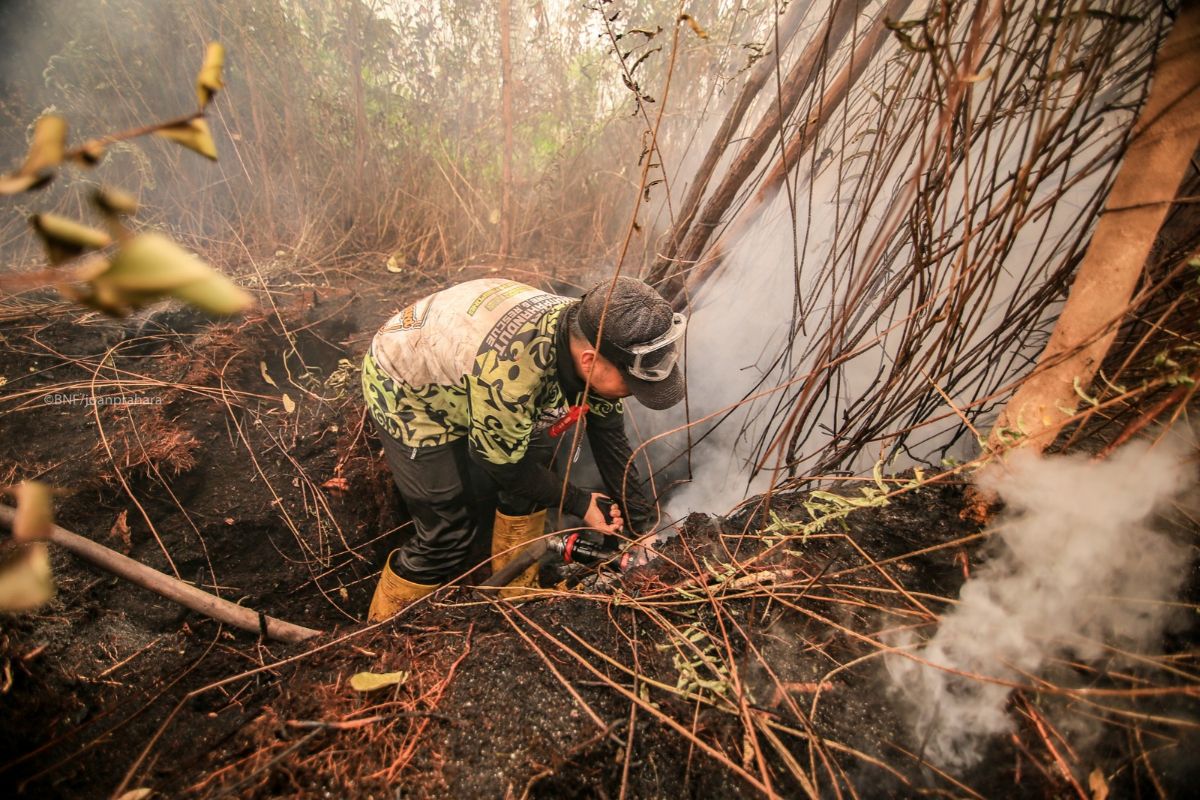
The response to our emergency appeal has made an extraordinary difference, allowing us to equip and support our nine community firefighting teams and assist additional independent teams with money, equipment and personnel. We are all in this together. But keeping these teams operational, safe and ready requires continued support.
Please donate today to help us keep fighting.
Your contribution will provide the equipment, training, supplies and resources our frontline teams need to protect Borneo’s forests, wildlife and communities, this year and beyond. Every fire extinguished means more forest saved, more wildlife protected and less carbon released into our atmosphere.
Thank you for standing with us. We still have a long way to go, and we cannot do it without you.
Simon